The ERP for Shopify
fashion and apparel brands.
Fulfil runs inventory, orders, warehouse, wholesale and accounting in one system for apparel brands selling on Shopify, in their own stores, on Amazon and to department stores. Size and color variants, pre-orders against inbound stock, EDI, returns and exchanges, and landed cost on overseas production. Used by Kotn, Cuts, Grunt Style and Goose & Gander. Live in weeks. No consultants required.
The short answer
Built for apparel brands that sell everywhere and run lean.
Fulfil is an ERP for founders who want one system from purchase order to general ledger, without paying the NetSuite tax or keeping consultants on retainer.
A good fit if you
- Sell on Shopify plus at least one of wholesale, retail stores, Amazon or department store EDI
- Manage styles in many sizes and colors, with drops and pre-orders
- Produce overseas and need freight and duty inside your unit cost
- Ship from your own warehouse, one or more 3PLs, or both
- Decorate, embroider or personalize some of what you sell
Where Fulfil stops
- Fulfil is not a PLM. Tech packs, sampling and fit approvals stay in your PLM or design tools.
- Fulfil picks up when a style becomes SKUs on a purchase order, and runs buying, inventory, orders, fulfillment and accounting from there.
Size and color variants
Generate every size and color as its own SKU from one style template. Stock, reorder points and sales by variant.
Drops and pre-orders
Pre-sell inbound units, push restock dates to Shopify, and give the first buyers the first units off the container.
Wholesale and EDI
Nordstrom, Target, Macy's and Bloomingdale's over EDI. NuOrder, Faire and FASHIONGO orders in the same system.
Returns and exchanges
Returns, size exchanges and in-store exchanges against the original order, with a reason on every line.
Decoration and made-to-order
Bills of materials for printed and embroidered SKUs. Personalization details carried on the order line.
3PLs, stores and landed cost
Route orders across 3PLs and stores. Add freight, duty and tariffs to unit cost. Track royalties.
Customer stories
Apparel brands running on Fulfil.
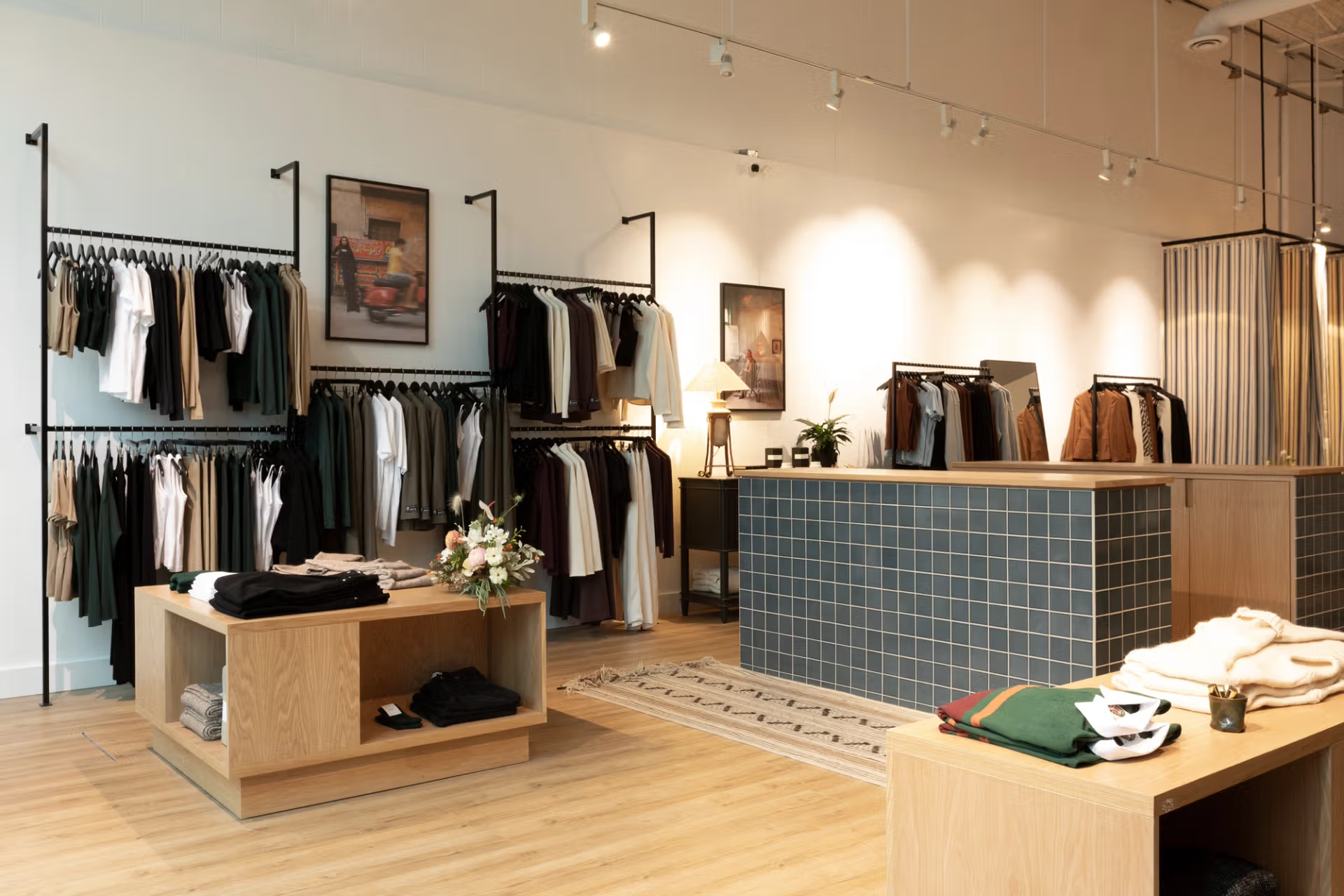

“We're growing high double-digits year over year without increasing team size, because a lot of the manual work was eliminated. The team can now focus on expansion.”


“Maintaining lean operations and fluid cross-functional communication is absolutely paramount to the success of a brand. The ability to make quick decisions based off of the same data. That's really what brings us to Fulfil.”
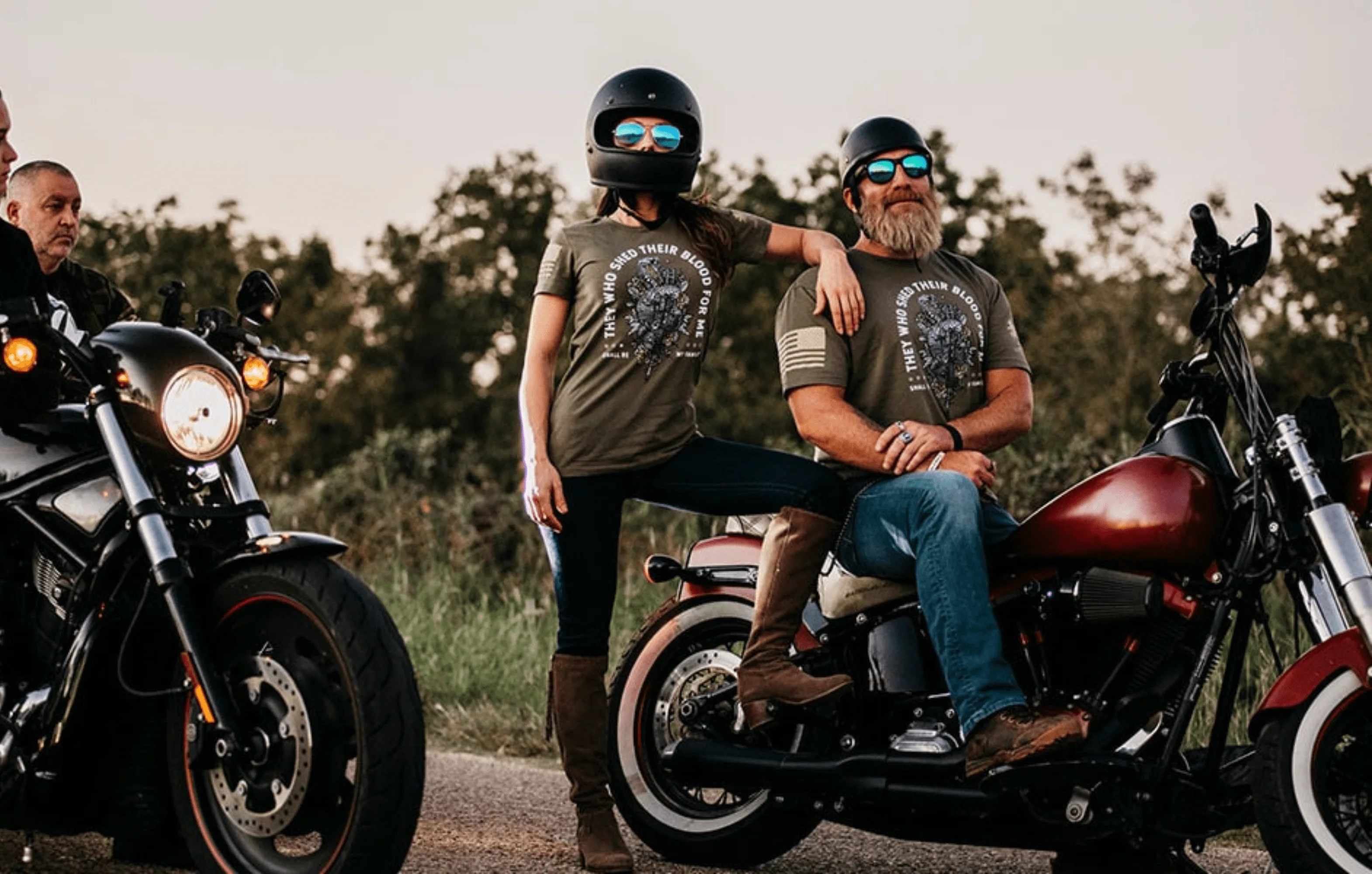

“Without Fulfil, we couldn't do any of it because Fulfil is what connects us to those channels.”
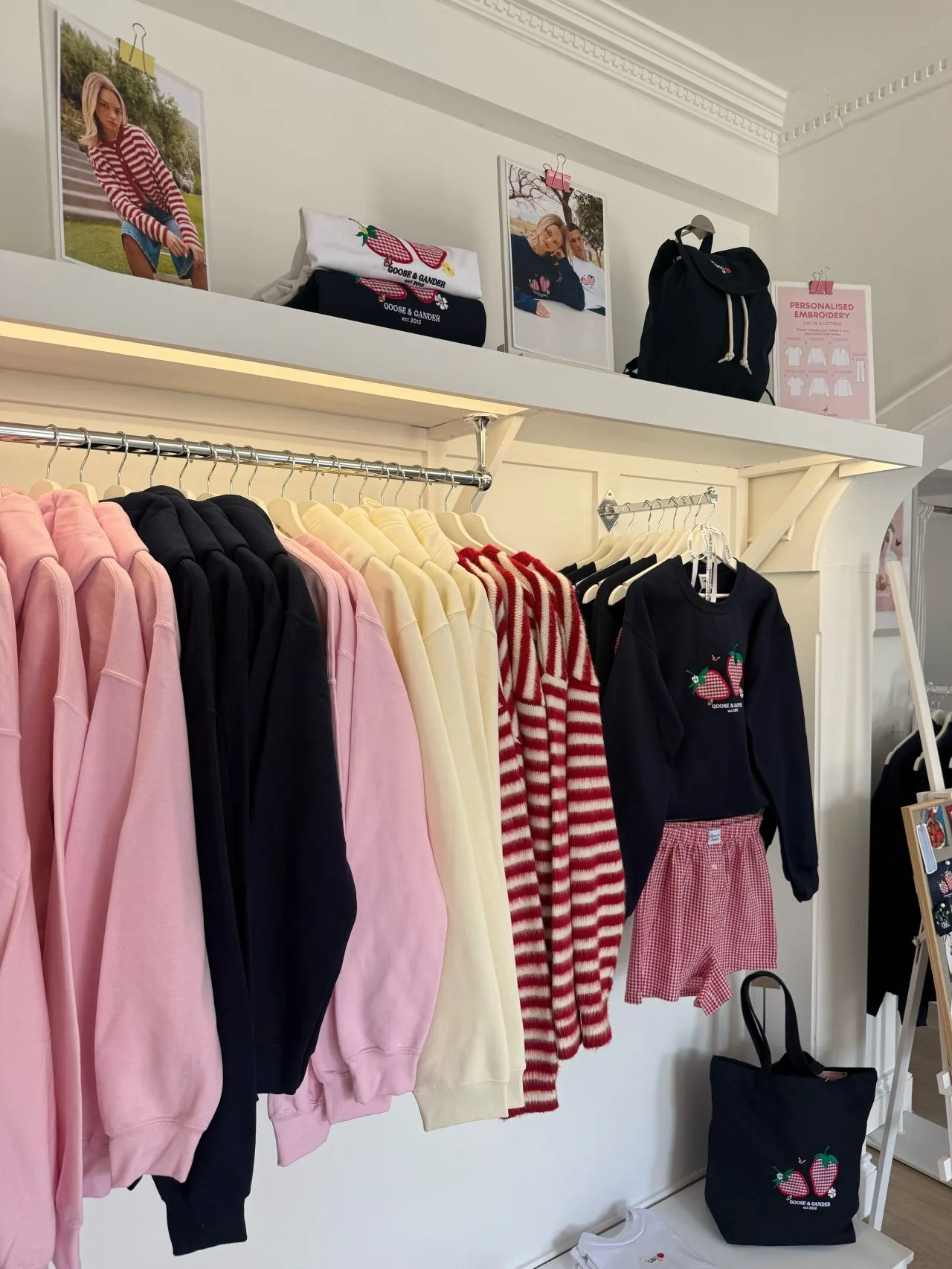

“It was like comparing Magento to Shopify. My system was almost like a Magento of e-commerce and Fulfil was the Shopify. It just fit better with what we were doing.”


“I'm so at peace with the decision that we made as a company. Your software is great. I run into almost zero problems. I open zero tickets. It works every single day.”

“Fulfil gives us more tools to solve the problem right away, which allows us to build trust with our customers. That's the priority.”
Size and color variants
One style. Every size and color as its own SKU.
Create a product template for the style and attach an attribute set, such as color and size. The Product Variant Builder previews every combination and creates the SKUs. Codes follow the template code plus attribute codes, so a black medium crew becomes CREW-BLK-M.
Add a new colorway to an existing template when it drops. Update categories and attribute sets across templates in bulk from a CSV file. American Hat Makers, which runs about 2,000 SKUs across DTC and wholesale, had its production team build a micro app to enter a whole size run for a style at once.
- ✓ Stock by variant and location across warehouses, 3PLs and stores
- ✓ Reorder points per variant, so you restock the medium before the XXL
- ✓ UPC management for the barcodes wholesale accounts require
|
|
Drops and pre-orders
Sell the drop before the container lands.
A pre-order in Fulfil is tied to real inbound supply, not a label on a listing. When a variant is sold out and a supplier shipment has an expected arrival date, Fulfil pushes that restock date to the Shopify variant.
Set a listing to publish on-hand plus inbound stock and you pre-sell the units on the way, and no more. Pre-order shipments wait until stock arrives. Pre-allocation links units on an inbound supplier shipment, transfer or production order to specific customer orders, so the people who bought first get the first units.
- ✓Restock dates on Shopify variants, calculated from your purchase orders
- ✓Channel availability that includes inbound stock within a forecast window you set
- ✓Inbound units allocated to the orders you pick, so the earliest buyers ship first
“The visibility into available-to-sell inventory and the flexibility to sell work-in-progress inventory and pre-book inventory was the number one reason we chose Fulfil.”
Wholesale and EDI
Department stores and DTC from the same inventory.
Retail purchase orders (850) come in as sales orders, and 860 cancellations cancel the matching order. Fulfil sends acknowledgements (855), advance ship notices (856) and invoices (810) back, and prints SSCC carton labels from the shipment. Connect directly over VAN, AS2 or SFTP, or through Orderful or SPS Commerce.
Wholesale marketplaces sit next to EDI. NuOrder, Faire and FASHIONGO orders import into Fulfil, and RepSpark maintains its own Fulfil integration. Inventory pools, committed quantities and cutbacks control the number each channel sees, so a Nordstrom PO doesn't get sold twice on Shopify.
- ✓Grunt Style manages wholesale B2B accounts with EDI alongside 13 retail stores, DTC and Amazon
- ✓Nomadix sells through 100+ retail partners including REI, DICK'S and Scheels
- ✓CANVAS Style runs Faire and other wholesale channels next to its Shopify store











Returns and exchanges
Wrong size? Exchange it on the original order.
Apparel returns are mostly fit. Fulfil's return wizard starts from the original sales order, so the return, the replacement and the refund all trace back to one record. Every line carries a return reason, so you can see which styles come back for fit.
If you run Loop on Shopify, Loop writes the return to the Shopify order and Fulfil imports it. With Loop native exchanges, Fulfil issues the credit for the return and ships the new size from the same order.
Order management in FulfilDecoration and made-to-order
Blanks in. Printed and embroidered goods out.
For decorated SKUs you keep in your catalog, give the finished product a bill of materials, for example the blank tee plus the print, and run production orders that consume the blanks. Fulfil calculates how many finished units your blank stock can build.
For one-off personalization, Shopify line item properties like name, thread color and placement are mapped to product options on the order line. The details travel with the order to your production floor, or to a 3PL that accepts them, such as ShipMonk for embroidery instructions or RyderShip for monograms.
Grunt Style does its own production and embellishment in-house on Fulfil. If you cut and sew with an outside factory, outsourced manufacturing tracks the fabric and trims you send and the finished goods you receive back.
3PLs, warehouses and stores
Every location, one inventory record.
Each 3PL, warehouse and retail store is a location in Fulfil. Warehouse routing picks where an order ships from, based on the priority you set.
Multiple 3PLs
Integrations with 3PLs including ShipBob, ShipMonk, Stord and RyderShip send orders out, and bring inventory and tracking back. Kotn added a UK 3PL through Fulfil's API when it opened its UK entity.
Next available warehouse
When stock moves and a shipment can't be filled where it was routed, an automation rule reassigns it to the next warehouse that has the units.
Store replenishment
Goose & Gander replenishes its five shops from the warehouse with internal shipments. Kotn's stores fulfill online orders through Shopify POS.
Landed cost and royalties
Know what a unit actually cost you.
Freight, duties, tariffs, insurance, brokerage and handling are recorded against the supplier shipment and added to each unit's weighted average cost. Post an estimate when goods are received, then true it up when the freight or customs invoice arrives. Keep HS codes and duty rates on your products and Fulfil adds an estimated duty line when you confirm the PO.
Selling licensed product? Royalty agreements can use a fixed amount per unit or a percentage of the sale, with overrides by channel or country. Fulfil accrues the royalty when you ship and invoice, and you generate the invoices you owe each licensor.
“We couldn't do any accounting. Tracking landed costs in multiple currencies was a challenge. We were doing all of the processes, but they were just very manual and in most cases done outside the system.”
FAQ
Apparel ERP questions, answered.
What is the best ERP for fashion and apparel brands on Shopify?
It depends on how you sell. Fulfil is built for apparel brands that run Shopify DTC alongside wholesale, retail stores, Amazon or EDI accounts, and want inventory, orders, warehouse, purchasing and accounting in one system instead of a stack of connectors.
Apparel and accessories brands on Fulfil include Kotn, Cuts, Grunt Style, Goose & Gander, American Hat Makers and CANVAS Style. Cuts and CANVAS Style both moved to Fulfil from NetSuite.
Can Fulfil handle size and color matrices?
Yes. You create a product template for the style and attach an attribute set, such as color and size. The Product Variant Builder previews every combination and creates one SKU per variant. Each SKU code follows the pattern template code, then attribute codes, so a black medium crew becomes CREW-BLK-M.
Every variant has its own stock by location, its own reorder point and its own sales history. You can add new colors to an existing template later, and update templates in bulk from a CSV file.
Can Fulfil handle thousands of apparel SKUs?
Yes. Variants are generated from attribute sets and updated by CSV import, so you are not building SKUs one at a time. For reference on catalog size, J. Stockard Fly Fishing runs 18,000 SKUs on Fulfil, and Enso Rings added more than 7,000 SKUs when it brought Lokai into the same warehouse.
Does Fulfil work for apparel drops and pre-orders?
Yes. A pre-order in Fulfil is tied to inbound supply. When a variant is sold out and a supplier shipment has an expected arrival date, Fulfil pushes that restock date to the Shopify variant. You can also set a listing to publish on-hand plus inbound stock, so you pre-sell the units on the way and no more.
Pre-order shipments wait until stock arrives. With inventory pre-allocation you link units on an inbound shipment to specific orders, so the customers who bought first get the first units when the container lands. Nomadix chose Fulfil for the ability to sell work-in-progress and pre-book inventory.
Can Fulfil connect to Nordstrom, Target and other department stores over EDI?
Yes. Fulfil supports EDI with retailers including Nordstrom, Target, Macy's, Bloomingdale's and Dillard's. Purchase orders (850) come in as sales orders, 860 cancellations cancel the matching order, and Fulfil sends acknowledgements (855), advance ship notices (856) and invoices (810) back. SSCC carton labels print from the shipment.
You can connect directly over VAN, AS2 or SFTP with native EDI, or through a provider such as Orderful or SPS Commerce. See Fulfil EDI.
Does Fulfil work with wholesale platforms like NuOrder, RepSpark, Faire and FASHIONGO?
Yes. NuOrder, Faire and FASHIONGO orders import into Fulfil, and RepSpark maintains its own integration that syncs customers, products, inventory, invoices and orders. To keep wholesale and DTC from selling the same units, you control the quantity each channel sees with inventory pools, committed quantities or cutbacks.
How does Fulfil handle apparel returns and exchanges?
From the original order you start a return, record a return that is already back, start an exchange for a different size or color, process an in-store exchange, or refund without a return. Each line carries a return reason, so you can see which styles come back for fit or quality.
If you use Loop on Shopify, Loop writes the return to the Shopify order and Fulfil imports it. With Loop native exchanges, Fulfil issues the credit for the return and ships the replacement from the same order.
Can Fulfil handle embroidery, screen printing and made-to-order?
Yes, in two ways. For decorated SKUs you keep in your catalog, give the finished product a bill of materials, for example a blank tee plus the print, and run production orders that consume the blanks. For personalization like name embroidery, Shopify line item properties are mapped to product options on the order line, so the details travel with the order to your floor or to a 3PL that accepts them, such as ShipMonk or RyderShip.
Grunt Style runs its own production and embellishment on Fulfil. See product customization.
Can I run multiple 3PLs and my own warehouse in Fulfil?
Yes. Each 3PL and warehouse is a location in Fulfil, and warehouse routing picks the location for each order based on the priority you set. An automation rule can move a waiting shipment to the next warehouse that has the stock. Store replenishment runs as internal shipments, which is how Goose & Gander restocks its five shops. See 3PL integrations.
How does Fulfil calculate landed cost on overseas production?
Freight, duties, tariffs, insurance, brokerage and handling are recorded as landed costs against the supplier shipment and added to each unit's weighted average cost. You can post an estimate when goods are received and true it up when the freight or customs invoice arrives. If you keep HS codes and duty rates on your products, Fulfil adds an estimated duty line when you confirm the purchase order.
Landed cost flows into COGS when the unit sells, so margin by style and channel uses the full cost. See COGS and landed cost tracking.
Does Fulfil track royalties on licensed apparel?
Yes. Royalty agreements can use a fixed amount per unit or a percentage of the sale, with overrides by channel or country. Fulfil accrues the royalty when you ship and invoice the product, and you generate invoices for what is owed to each licensor.
Is Fulfil a PLM?
No. Fulfil does not manage tech packs, sampling or fit approvals. Keep those in your PLM or design tools. Fulfil takes over when a style becomes SKUs on a purchase order: buying, landed cost, inventory, orders, wholesale, fulfillment and accounting.
Built-in capabilities
Features apparel brands rely on.
Inventory management
Stock by variant across warehouses, 3PLs and stores
Order management
DTC, wholesale and retail orders, returns and exchanges
Purchasing
Factory POs with expected dates that drive pre-orders
Warehouse management
Scan-based pick, pack and ship in your own building
Inventory forecasting
Demand by variant to size your next buy
RFID scanning
Count tagged cartons and racks without scanning each barcode
Jewelry and accessories
How accessories brands run on Fulfil
Fulfil vs NetSuite
Why Cuts and CANVAS Style moved off NetSuite
Agentic ERP
Run it with your own AI agents.
Let AI do the busywork. Will Andrews at Grunt Style built 25 micro apps on Fulfil's MCP connection with Claude, including a view for each channel and one covering all 13 stores. At American Hat Makers, production staff enter a whole size run for a style through a micro app. Read how Grunt Style did it.
Live in weeks.
No consultants required.
Kotn, Cuts, Grunt Style and Goose & Gander run their apparel businesses on Fulfil. Run yours on data you trust.