 Men's accessories · 2023
Ridge put its inventory purchasing on Fulfil after it found it could not pass an audit.
Ridge makes wallets and everyday carry, and ran its inventory on spreadsheets as it grew. To get its 2021 books audited for an offer to buy the company, it spent over a million dollars on accounting, and its CEO still doubted they would pass. Ridge signed with Fulfil that year, and now routes its orders and buys its inventory there, with a true cost for each purchase order. Since then, by Sean Frank's account, revenue has gone from about $50 million a year to over $250 million.

The story in short
- Sells
- Wallets, keys, keycards, rings, pens and knives
- Channels
- Its own website on Shopify, Amazon and retail, with warehouses in the US, Canada, Australia, the UK and the EU
- Before Fulfil
- Spreadsheets, and a direct connection from Shopify to its 3PL
- Who speaks
- Sean Frank, CEO
01
Ridge grew fast and kept its inventory on spreadsheets.
Ridge makes wallets. Daniel and Paul Kane, father and son, founded it in 2013, and Sean Frank later became its CEO. As Ridge added keys, rings, pens and knives, and warehouses in Canada, Mexico, the UK, Australia and the EU, its inventory and its order rules stayed in spreadsheets.
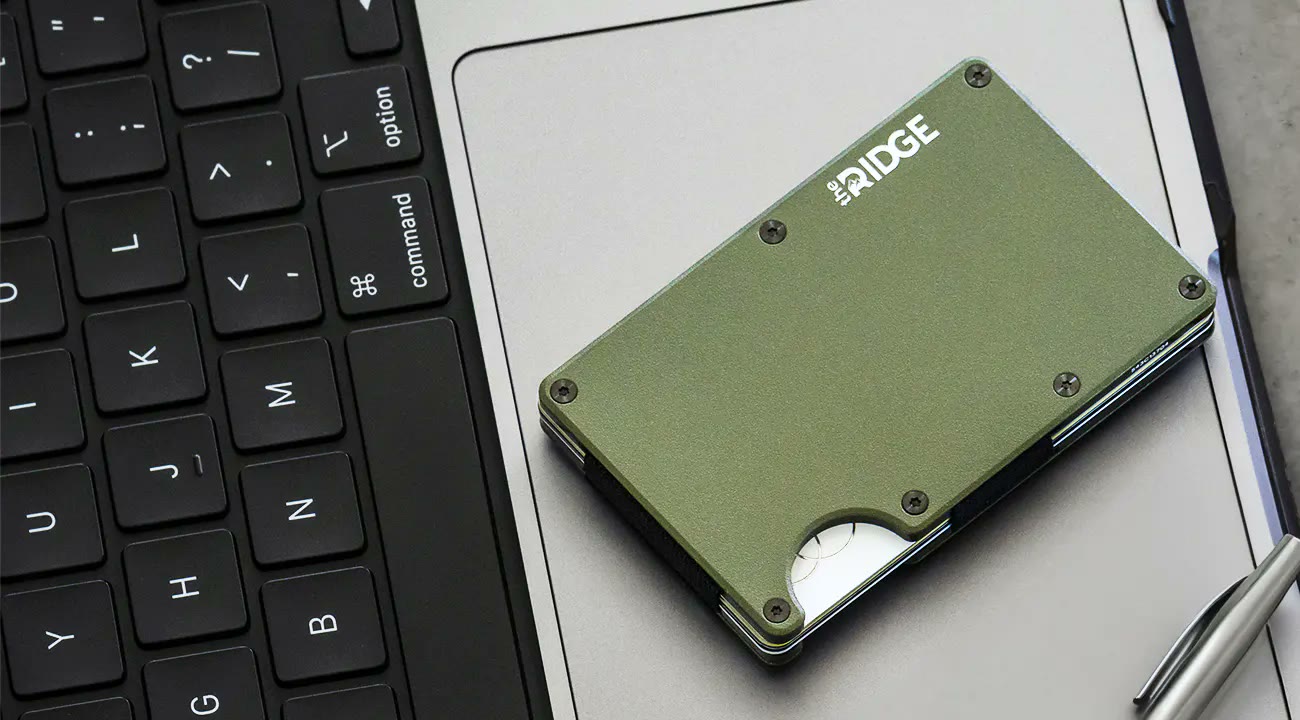
Orders went from Shopify straight to Ridge's 3PL. A change to how orders were sent meant asking the 3PL's technical team for a quote.
 Sean FrankCEO, Ridge
“We did not have an ERP. We were not measuring inventory into our business, through our business, out of our business. It was done via spreadsheets.”
02
An offer to buy Ridge needed audited books, and a million dollars of accounting could not get them there.
Ridge had an offer to buy the company for hundreds of millions of dollars. To go through with it, Ridge needed audited financials. Its accounting firm, Armanino, got the 2021 books ready, and Moss Adams audited them.
Sean FrankCEO, Ridge“Why did it cost me a million dollars? And I still probably couldn't pass that audit.”
Sean Frank puts it down to how Ridge bought inventory. Purchase orders went out, stock came in, and nobody matched the two.
The market fell before the audit was done, and the offer went with it.
 Sean FrankCEO, Ridge
“So in a different world where the market held strong, I probably would have missed out on hundreds of millions of dollars because I couldn't pass an audit.”
03
Ridge signed with Fulfil in 2021 and started with its orders.
Ridge signed with Fulfil in 2021 and went live that fall, with Fulfil connected to Shopify and to its 3PLs.
Orders from Ridge's website, Amazon and retail now come into Fulfil, and rules send each one to a warehouse. Some products can ship from only one.
Sean FrankCEO, Ridge“So order comes into our website and it has a customized wallet attached to it that can only be filled out of one warehouse. Fulfil takes care of that, right?”
Zach Smith, Ridge's Director of Operations, adds warehouses and sales channels in Fulfil without asking a vendor first.
04
Ridge buys its inventory in Fulfil, with a true cost for each purchase order.
Ridge runs all of its inventory purchasing in Fulfil. Each purchase order carries its true cost, and the inventory is tracked through the system.
Sean FrankCEO, Ridge“We track that inventory through our system and apparently that helps you pass audits.”
As Ridge's order volume rose, the system kept up, by Zach Smith's account.
Sean FrankCEO, Ridge“And if you ever get an offer for hundreds of millions of dollars, just don't let an audit be the thing that gets in the way.”
05
Since Ridge joined Fulfil, its revenue has grown about five times and its gross margin has risen.
 Sean FrankCEO, Ridge
“When we joined you guys, I think we were doing like 50 million a year. We'll do over 250 million this year.”
Gross margin rose too. Sean Frank counts it after product costs, shipping, returns and fulfillment: about 70% on wallets when Ridge started with Fulfil, and 80% across the whole business this year.
Ridge now sells luggage from a bonded warehouse in Los Angeles. The luggage waits there without duties paid, and Fulfil sends out each piece as an order comes in, so Ridge does not pay duties on a whole shipment at once.
Sean FrankCEO, Ridge“But you want your ERP to be as silent as possible in your organization. You don't want to hear about it.”
Ridge is moving warehouses to Flexport, and Sean Frank says he did not have to worry whether the systems would connect.
06
The film, word for word.
Read the transcript of the Sean Frank, on the audit film
I could not get audited financials. We spent probably over a million dollars last year in accounting services, right? And a lot of that went to Armanino, our accounting firm, to get our books ready to be audited. And then [unclear] went to Moss Adams to audit those books. This was for 2021. We could probably pass an audit for 2022, but why did that cost me so much money? Why did it cost me a million dollars? And I still probably couldn't pass that audit.
It's because of the way we bought inventory. We did not have an ERP. We were not measuring inventory into our business, through our business, out of our business. It was done via spreadsheets. And I bet a lot of brands listening to this right now are like, yeah, that's how we do it. You place a PO and it kind of shows up and no one's matching it back. All of these stupid f***ing accounting things that apparently the world really cares about.
And I've told some people this, we had a offer to buy Ridge for hundreds of millions of dollars, right? And that's why we spent a million dollars auditing it. It was like, okay, fine. We'll go through this process. If someone's going to give us multiple hundreds of millions of dollars, great, we'll go through this, right? Luckily, the market kind of fell apart before the audit was supposed to get done. So that company, that offer, you know, kind of poofed away with that company's valuation. But I couldn't pass an audit because we did not have systems in place, right? So in a different world where the market held strong, I probably would have missed out on hundreds of millions of dollars because I couldn't pass an audit.
So that's why we signed with Fulfil at some point in 2021 to get us ready because you knew this [unclear] was coming. And now we run all of our inventory purchasing, right? One, it's an order management system. So it helps us reroute to the appropriate, you know, warehouse, right? So order comes into our website and it has a customized wallet attached to it that can only be filled out of one warehouse. Fulfil takes care of that, right? If it's a split order, Fulfil takes care of all that, saves money and time on, you know, tickets or whatever. But the big thing is we do all of our inventory purchasing for it now and we have true costs per PO. We track that inventory through our system and apparently that helps you pass audits. So don't waste a million dollars on s***ty accounting fees. And if you ever get an offer for hundreds of millions of dollars, just don't let an audit be the thing that gets in the way.
Read the transcript of the Sean Frank, on Ridge since Fulfil film
When we joined you guys, I think we were doing like 50 million a year. We'll do over 250 million this year. We're getting close to 500 million, right? And the goal is a billion in revenue. When we started working with you guys, I think our gross margin for the wallet business was like 70%. That is after product costs, shipping costs, returns, fulfillment, everything that goes into that is like 70%. We'll end this year at 80% gross margins across the whole business. So we're seeing revenue increase, gross margin increase. And then with that, you get the benefit of profit increasing.
2020, everything was breaking. It was COVID, right? We had probably multiple warehouse partners and we were adding a second node, right? So we wanted to be able to route orders between all these different nodes and avoid split shipping, right? The worst thing is when you're expanding your product line across multiple nodes, people are going to want to place weird orders and you will not have the right step at the right place. And the manual work to do split shipments was just really, really high inside of Shopify, right? It was taking two or three full-time support people to do that. And we're like, oh, there must be a better solution to this. Additionally, we're rolling out global markets for the first time. So we're placing supplier orders with vendors in China and Vietnam. How do you get those orders to Canada, the UK, EU, and your multiple US nodes and do that effectively and saving money? So we just knew it was time for an ERP.
Inside of our organization, we want ops to be the child that's never heard, right? So we're very much a marketing organization. So marketing typically gets all the flowers. But the ops side works really hard. It's incredibly important. But we never really want to hear about any of the issues. And the thing I like the most about Fulfil is the team uses it. Everything gets done. And no matter what crazy things are thrown at them, they just find new ways to automate it, right? So right now, what we're doing is we have a bonded warehouse in Los Angeles full of luggage. And we are individually pulling luggage pieces out to fulfill it to customers. And that is handled automatically through automation and Fulfil, right? So instead of paying for a bunch of tariffs and duties and they just show up all at once, we can actually have a huge capital advantage by having it sit there and then using Fulfil to individually feed out orders as they come through. And it's because inside of my organization, I was like, hey, I need you guys to figure out a way to launch luggage as a program that is totally different than everything else we do, but do it for the most cost-effective way possible and partner with Fulfil to figure that out how to get it done.
In the ERP space, there's like three major companies. All of them were founded and built before 2000. The technology at the core is still ancient and from 2000 and set up for big legacy companies that don't really exist anymore, right? And Fulfil was the first of a new generation and thinking about how to build an ERP for the modern era, right? For the modern Shopify brand. And with that, you guys have just been way faster to embrace AI than a NetSuite ever will, right? And I really think the future of the entire internet is accessing it through your harness, right? So it's going to be either Codex or Claude or whoever ends up winning that race. But all data will flow into there. All decisions will be made in there. All agents will be run out of there. And I don't think NetSuite will ever get that done, right? But you guys are actually setting up the integrations right now so that I can run agents inside of Fulfil and pull that data back.
You want to find a business whose company culture is as close to your company culture as possible. We're a small business. We're grinding stuff out. They're a small business. They're grinding stuff out. Also, we're an important customer, right? If you guys are a small business, you're going to fight harder to keep us happy. But now I think it's just seen as a positive. If someone told you they had 7,000 employees, it'd be like, why? And it's like, I think you guys are actually set up to take advantage of the AI wave, right? You guys will save money. You guys will pass it on to everybody else. And it wouldn't be possible if you had 700 people. You want to do business with good people, first and foremost, right? And you want to do business with humans. So you want people who are willing to actually work with you, actually set you up for success, and empower you to do whatever you want with their tool.
Look, I think trust is consistency over time, right? Doing what you say you're going to do, show up every single time to do it. At this point, [unclear] our most trusted vendor. It's probably the only vendor we've had for six years we've never tried to switch, right? Part is because lock-in is real with ERPs. So you want to pick somebody who's been in business a long time and is getting better every single year.
I say this all the time, and it's not to belittle what you guys are doing. It's very important. But you want your ERP to be as silent as possible in your organization. You don't want to hear about it. It is like a toothache or whatever. If it's not bothering you, your teeth are fine, right? That's what I think about almost every ERP out there. And look, you guys have been great to work with. You guys deliver the tech rollouts we need to. You guys have a million integrations. We're switching warehouses to Flexport right now. And every time you switch warehouses, it's like, oh, is the tech going to work? And you guys are set up to begin with. I didn't have to even worry about it, right? Things are just going to work. With that being said, if you're hearing about your current ERP all the time, that is a very bad thing, right? Like two people in an organization to hear about it. Maybe your VP of ops, maybe your COO. The rest of it, it's supposed to make your life easier. You guys make my life easier. Thank you.
Next story

 Read the story