 Travel and luggage · 2026
Monos added regions, stores and 3PLs on Fulfil without adding people to its supply chain team.
The Canadian luggage brand outgrew spreadsheets when it launched in the UK and Australia. A simple order system broke at peak and a year and a half on SAP went nowhere. On Fulfil it took on new regions and channels without adding people to its supply chain team.

The story in short
- Sells
- Luggage, bags and travel accessories. A travel and lifestyle brand based in Canada, with nine-figure revenue
- Channels
- Shopify, Amazon (1P and FBA), wholesale to Nordstrom and Selfridges, and its own stores in the US and Canada. North America, the UK, the EU and Australia
- Before Fulfil
- Spreadsheets, a simple order system that broke at peak, and a year and a half on SAP
- Who speaks
- Victor Tam, Co-Founder and CEO. Brian Lim, Senior Director of Supply Chain
01
Monos outgrew its spreadsheets when it launched in the UK and Australia.
Monos started as a luggage brand in Canada and now sells bags and travel goods online, on Amazon, through retailers and in its own stores. With one channel, spreadsheets were enough. The trouble came with the second and third country.
 Victor TamCo-Founder and CEO, Monos
“In the early days, everything's simple, right? You have one channel, digital, you can literally get by with just spreadsheets.”
Once Monos sold in the UK and Australia, it had several currencies to report in and stock at 3PLs in several regions.
Brian Lim, Senior Director of Supply Chain, runs everything from procurement to fulfillment and returns. Before Fulfil, his team built its inventory picture by hand from 3PL exports.
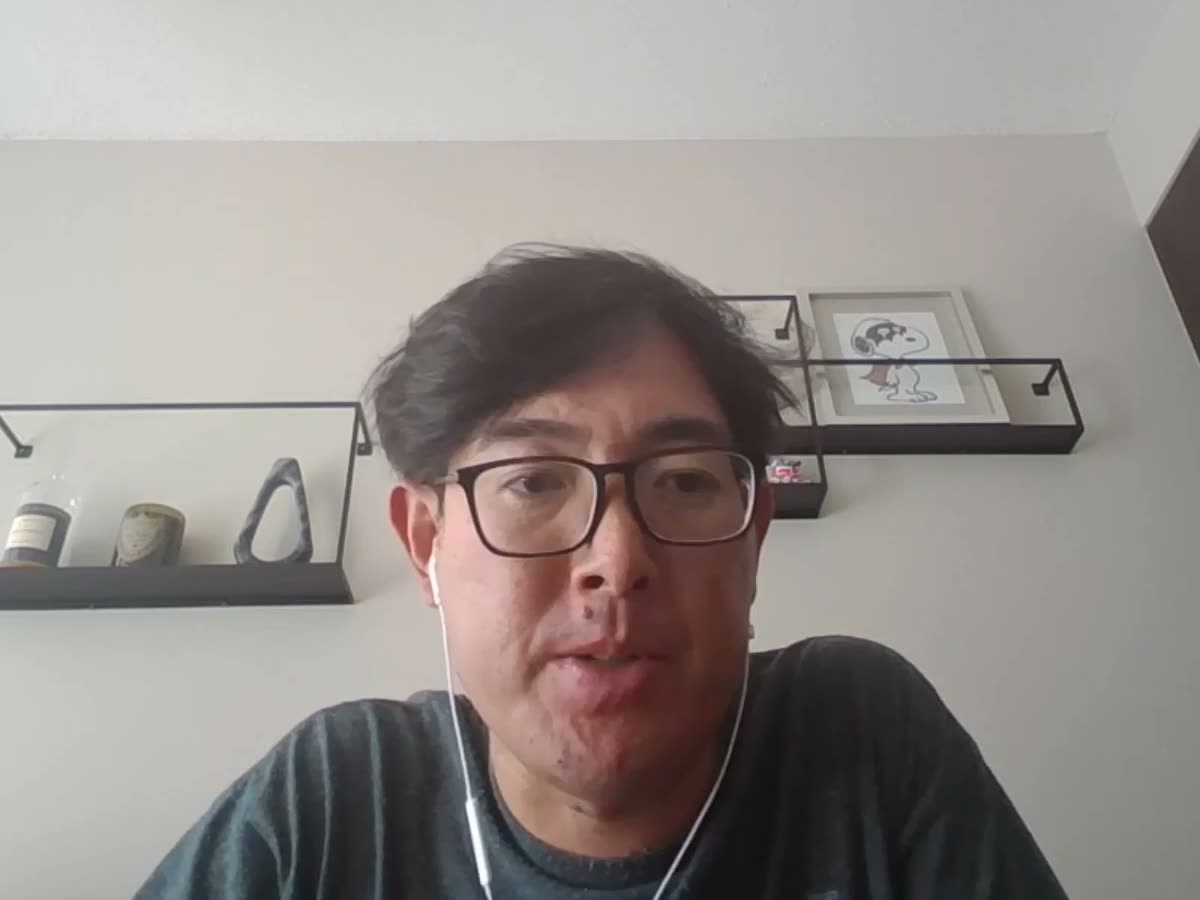 Brian LimSenior Director of Supply Chain, Monos
“Things like inventory management was extremely difficult before because everything was living either on our 3PLs, WMS exports, plus like our master Excel sheets that we use to kind of combine that information.”

02
A simple order system broke at peak, and a year and a half on SAP went nowhere.
Monos ran its orders through a simple order management system. At one peak it broke, and the team sorted the orders and assigned them to 3PL regions by hand.
Monos then signed with SAP. The implementation ran through a third-party integrator, and connecting Shopify alone took months.
 Victor TamCo-Founder and CEO, Monos
“We did actually sign up with SAP and went through a year and a half of implementation. And through that process, we just knew that this wasn't for us. It actually created more work than what we were trying to solve.”

03
Monos chose Fulfil for how fast it changes, and implemented it with a small team.
Victor Tam met Fulfil's founder, Sharoon Thomas, at a summit of brand founders. Sharoon had worked as an SAP integrator before building Fulfil.
 Victor TamCo-Founder and CEO, Monos
“Most people underestimate how important it is, not just the initial implementation, but understanding how nimble your partners are, right?”
Brian Lim joined Monos as a NetSuite fan. Fulfil's implementation team, led by a consultant named Luis, changed his mind.
Brian LimSenior Director of Supply Chain, Monos“But I find with you guys, you deploy a very aggressive, agile, small team. And you guys work with us very aggressively to push out these deliverables in terms of the implementation very quickly.”
04
Monos keeps its currencies, landed costs and store stock in one system.
Monos has a Canadian base, a US entity, stores in the US and Canada, and business in the UK and Australia. Each report crosses currencies, and Fulfil converts them.
Stock moves through regions and warehouses and sells at different times, so the cost of each unit changes with where it landed. Victor Tam wanted that cost right every month.
Victor TamCo-Founder and CEO, Monos“With goods moving through different regions and warehouses, and getting sold at different times, our monthly P&L was always fluctuating before we had an ERP”
Each Monos store is a stock location in Fulfil. Monos plans to ship to nearby customers from the stores as they mature.

05
Over 18 months of new regions and channels, Monos kept its supply chain team the same size.
Brian LimSenior Director of Supply Chain, Monos
“I would say that over the past 18 months, there's been a surge of complexity within our organization from a supply chain perspective. But despite that, we've actually maintained the same headcount and managed to keep the same workload for all of our employees effectively.”
Much of the routine inventory work now runs through AI on Fulfil's records, with people checking the result.
People outside supply chain now look up stock dates and reorders themselves, instead of asking Brian Lim's team.
Victor Tam's team builds its own reports and agents inside Fulfil by describing them in plain English.

06
New 3PLs and channels go live for Monos in weeks.
Most 3PLs Monos approaches already work with Fulfil, and Amazon, both 1P and FBA, connects out of the box. A new partner goes live in weeks, so Monos can enter a market sooner.
Victor TamCo-Founder and CEO, Monos“I don't think we would have actually even expanded if we didn't have Fulfil.”
Monos keeps opening stores, and recently launched Postcard, a cafe and listening lounge in Chicago.
07
The film, word for word.
Read the transcript of the Victor Tam film
Victor Tam: I don't think we would have actually even expanded if we didn't have Fulfil. Yeah, Monos, when we first started, was predominantly a luggage brand, but the long-term vision has always been, you know, a brand in the travel and lifestyle space that spans across multiple categories. In the early days, everything's simple, right? You have one channel, digital, you can literally get by with just spreadsheets. We definitely found things to get complicated as we expanded, especially, you know, first through geography, right? So we launched into UK and Australia. When we had started multiple geos, that's when we started to find, you know, whether it's currency issues and reporting, being able to track through multiple 3PLs through different regions. So that was definitely a point where we needed to find a solution.
We had used very simple OMSs. Given the volume that we were doing, there were still a lot of issues. Actually, there were a period where it broke and we had to manually sort all the orders and manually assign them to different 3PL regions. Their servers were just not built to be able to handle that type of volume. We did actually sign up with SAP and went through a year and a half of implementation. And through that process, we just knew that this wasn't for us. It actually created more work than what we were trying to solve. You don't know until you kind of go through, you know, take the first step. And our first step was going through the traditional ERPs. And I think there was a lot of learnings there. First, the whole industry and process didn't really make sense. We found that process to be extremely slow, first of all, very expensive. And in most cases, a lot of back and forth actually just didn't really get anywhere after close to a year of integration.
I think the implementation with Fulfil was simple. The first thing was, are we not going to have the same experience as SAP, right? The super dragged out implementation process, working with third-party integrator, the cost involved with that, that was a completely different approach that we're going to have with Fulfil. We have a base out of Canada. We have a U.S. entity and we have five retail stores in the States as well. We're also now in UK, Australia.
Most people underestimate how important it is, not just the initial implementation, but understanding how nimble your partners are, right? Because as we can see, even today, just AI has massively disrupted a lot of these platforms. And from just working side by side with ST and his team gave us kind of this confidence of like, okay, like as the landscape evolves with technology, this software is not just going to outdate itself because it's constant improvement. Whereas traditional like ERP, you're going to find that things are going to be a lot slower and there's less tailoring to, you know, businesses like ours.
I don't think we would have actually even expanded if we didn't have something, to be honest. Before, you know, we were predominantly in North America, so U.S. and Canada, and yeah, it's just a lot of fragmented data, a lot of Excels. We were just always behind [unclear] our true landed costs. Yeah, it definitely gave us confidence to be able to, like, reach into newer channels and geos with Fulfil, knowing that we had an ERP partner that would be able to integrate fairly seamlessly.
Read the transcript of the Brian Lim film
Brian Lim: Having Fulfil enter the game as our ERP was quite a bit of a game changer for us. Senior Director of Supply Chain over here at Monos. So everything from procurement all the way out to fulfillment and reverse logistics. Monos is a very large scale company. We do nine figure revenue across several regions of operations. We're in North America, we're in the EU, the UK, Australia, and there are a couple of burgeoning regions that we are on the cusp of entering.
Kind of weird to imagine being where we are currently having you guys as our ERP, plus the state of things currently with AI. And just, you know, just rewinding that clock like 730 days and thinking or a thousand days and thinking of how things were back then. And, you know, that period of time, it seems like it's a lot more due to the rate of change that's transpired.
I think the one thing that, you know, I've been very happy with, with Fulfil is just rate of change. It seems that there's constantly kaizen within your organization, the fact that you're always trying to make incremental changes throughout the structure of the ERP itself. And, you know, like as you have worked with other large scale ERPs, sometimes you don't see that same iterative change. And it's nice to see that progressive element. And I feel that it really reflects the way that our organization is as well. Really is an organization that seeks to constantly improve everything, all our processes, just incrementally day by day, always trying to find a better way of doing things. And I feel like Fulfil definitely reflects that on that side of things. And it's very much a matching spirit.
Things like inventory management was extremely difficult before because everything was living either on our 3PLs, WMS exports, plus like our master Excel sheets that we use to kind of combine that information. Whereas now we natively have it within, you know, Fulfil itself where it should be living.
We've entered new regions, we've entered new channels, or we've grown channels that we [unclear] did business in. And like, I would say that over the past 18 months, there's been a surge of complexity within our organization from a supply chain perspective. But despite that, we've actually maintained the same headcount and managed to keep the same workload for all of our employees effectively. So we're effectively doing more with the same amount of people.
I think one of the greatest things about Fulfil is how aggressive you guys have been with partner expansion. Effectively, every potential partner that we reach out to regarding a new opportunity, you guys have already, they have some knowledge or experience where they do actively work with you, right? So you guys are a known, you guys are definitely a known quantity within our industry. And like whenever we want to do the Amazon, for example, whether it be 1P or FBA, you guys have, you know, out of the box integrations that are very easy to integrate and plug into. When we look to expand with other 3PLs that are major players, most of them, I would say at least 80% of them have heard of you. And the 20% that have not tend to be, I would call more along the lines of like old school 3PLs, you know, like the mom and pop. So yeah, like whenever we want to pursue an opportunity, it definitely is better for us knowing that most of the partners that we seek these opportunities with have some experience with you.
You guys are definitely like hands on. You guys really come, you know, ready to like really ready to like implement and to roll out. I mean, I think one of the things that you guys probably pitch and I agree with is speed of implementation. You know, with any of the larger or traditional ERPs, you often find that to properly execute an implementation, you're looking anywhere from six months to two years, right? And it can be an extremely painful, prolonged process involving a lot of people across a lot of functions within an organization. But I find with you guys, you deploy a very aggressive, agile, small team. And you guys work with us very aggressively to push out these deliverables in terms of the implementation very quickly. So your implementation team was incredible. The people that we work with, Luis was one of the best consultants we've ever worked with, quite frankly. And so he was a true pleasure to work with. And so the implementation, the speed at which we can roll out integrations, which means the speed that we can enter markets, the speed at which we can take advantage of new opportunities. Like we're looking at, you know, weeks, not months, right?
I was a huge fan of NetSuite coming on board. I'm kind of 180. And I actually feel that a lot has to do with just like how incrementally you guys change things and just how open you guys are to basically a lot of things that a lot of other ERPs try to gatekeep. You guys are especially effective for brands like D2C that are agile, that try to be tech savvy and tech leveraged, right? Like you guys have always kind of like advertised yourself in that way. And I feel like there is a lot of truth to that. Like I said, like as we explore possible partnerships, whether it be like channels or 3PL partners, whenever we open conversations with potential partners who are also, you know, tech savvy, tech forward and moving in the direction of like, you know, like leveraging AI, they all have heard of you or are integrated with you already. Right. So like, I definitely feel like that's one thing that people should keep in mind. Like if their organization also values those same things.
Next story

 Read the story