 Cookware · 2026
HexClad passed half a billion dollars in revenue with its orders and inventory in Fulfil.
The cookware brand was doubling, and its inventory lived in spreadsheets. After a first system that never went live and a hard try at NetSuite, HexClad went live on Fulfil in 90 days. It has since gone from two US fulfillment centers to five and opened four new regions.

The story in short
- Sells
- Hybrid cookware that combines stainless steel and non-stick
- Channels
- Shopify, Amazon (mostly FBA), retail partners such as Costco, and EDI. The US, Canada, Mexico, Japan, China and Australia
- Before Fulfil
- NetSuite, ShipStation, spreadsheets, and an inventory system that never went live
- Who speaks
- Jason Panzer, President and CFO. Brian Nanry, Head of Operations. Manuel A. Calderon, Senior Global Operations Manager
01
HexClad was doubling, and its inventory lived in spreadsheets.
HexClad makes hybrid cookware that combines stainless steel and non-stick, with chef Gordon Ramsay as its partner. It sells on Shopify and Amazon and through retailers such as Costco. When Jason Panzer joined as CFO, the business was growing fast and nobody could say with confidence where the stock was.
Danny Winer, HexClad's co-founder and CEO, started the company with a co-founder after looking for better pots and pans in 2015 and deciding to develop them.

 Jason PanzerPresident and CFO, HexClad
“Things were pretty messy at HexClad on a lot of levels when I joined, and inventory management, demand planning, and distribution were all real problems.”

HexClad's stock sat in a warehouse it ran itself and at several 3PLs, and the systems did not talk to each other. Shopify sales came off the inventory count once a day, by hand.
 Brian NanryHead of Operations, HexClad
“When I started at HexClad, they were taking Shopify orders at the end of every single day in a Google sheet and subtracting that from the ending total from the day before.”
Manuel A. Calderon ran HexClad's warehouse at the time. It had no warehouse management system.

02
A first inventory system never went live, and NetSuite was hard to bend.
Jason Panzer's first job as CFO was to get HexClad's inventory under control. The company bought an inventory management system right away. It never went live.
HexClad ran NetSuite as its ERP, ShipStation for shipping and spreadsheets for planning. It tried to make NetSuite work for a brand that sells direct.
 Jason PanzerPresident and CFO, HexClad
“We wanted something that was D2C native, and Fulfil delivered.”
Brian Nanry joined as Head of Operations the day before he heard that HexClad would move to Fulfil in 90 days. He had worked with Cin7, Xorosoft, Stitch Labs and NetSuite at earlier jobs, and did not think it could be done. HexClad went live on Fulfil in 2023.
 Brian NanryHead of Operations, HexClad
“I thought I was going to get fired, but the Fulfil team made it happen, and we went live in 90 days.”
03
Every HexClad order goes to a warehouse by rule, down to the zip code.
All of HexClad's orders, from every channel, come into Fulfil. Rules send each one to a fulfillment center by state, by product or by bundle, and the team can change a rule in the moment.
 Manuel A. CalderonSenior Global Operations Manager, HexClad
“We don't have to second guess as to who's supposed to fulfill what. Everything is down to the zip code.”
HexClad sells many bundles. The rules keep the pieces of a bundle going to one fulfillment center, so an order splits as little as possible.
In one busy stretch, more orders were headed to HexClad's Tennessee warehouse than it could ship. The team moved them to a warehouse in another state.
Jason PanzerPresident and CFO, HexClad“We saw the orders coming in and knew that our Tennessee warehouse was going to be overloaded. We routed the orders to a different state with no problem at all.”
The routing is done before the warehouse team starts its day.

04
HexClad went from two US fulfillment centers to five and opened four new regions.
In the US, HexClad went from two fulfillment centers to five. It took its Canada business in hand with two 3PLs there, and opened Mexico, Japan, China and Australia as new regions.
 Brian NanryHead of Operations, HexClad
“Domestic US, we've gone from two fulfillment centers to five. We have kind of taken control over our Canada entity, opened a 3PL and second subsequent 3PL on top of it.”
Each new warehouse or marketplace needs an integration. Where Fulfil had none, its team read the partner's API documents and built one. Manuel A. Calderon now connects new warehouses himself.
The hardest move came at the start of a third quarter. HexClad changed 3PLs and added two nodes, with a new WMS, in the run-up to October Prime Day and the holiday peak.
Brian NanryHead of Operations, HexClad“We had about four weeks to do a full integration with a new 3PL partner and a new WMS, and Fulfil made it happen in three weeks, all in the midst of October Prime Day and rolling right into peak.”
HexClad sells mostly through Amazon FBA. When a product sells out in its own warehouses and Amazon still has stock, a rule in Fulfil sends those orders to Amazon Multi-Channel Fulfillment.

05
With Claude reading Fulfil, HexClad's team found Black Friday problems before they hit.
HexClad had used Gemini and other AI tools. It settled on Claude, connected to Fulfil through MCP, so a question about orders, stock or a 3PL is answered from Fulfil's records.
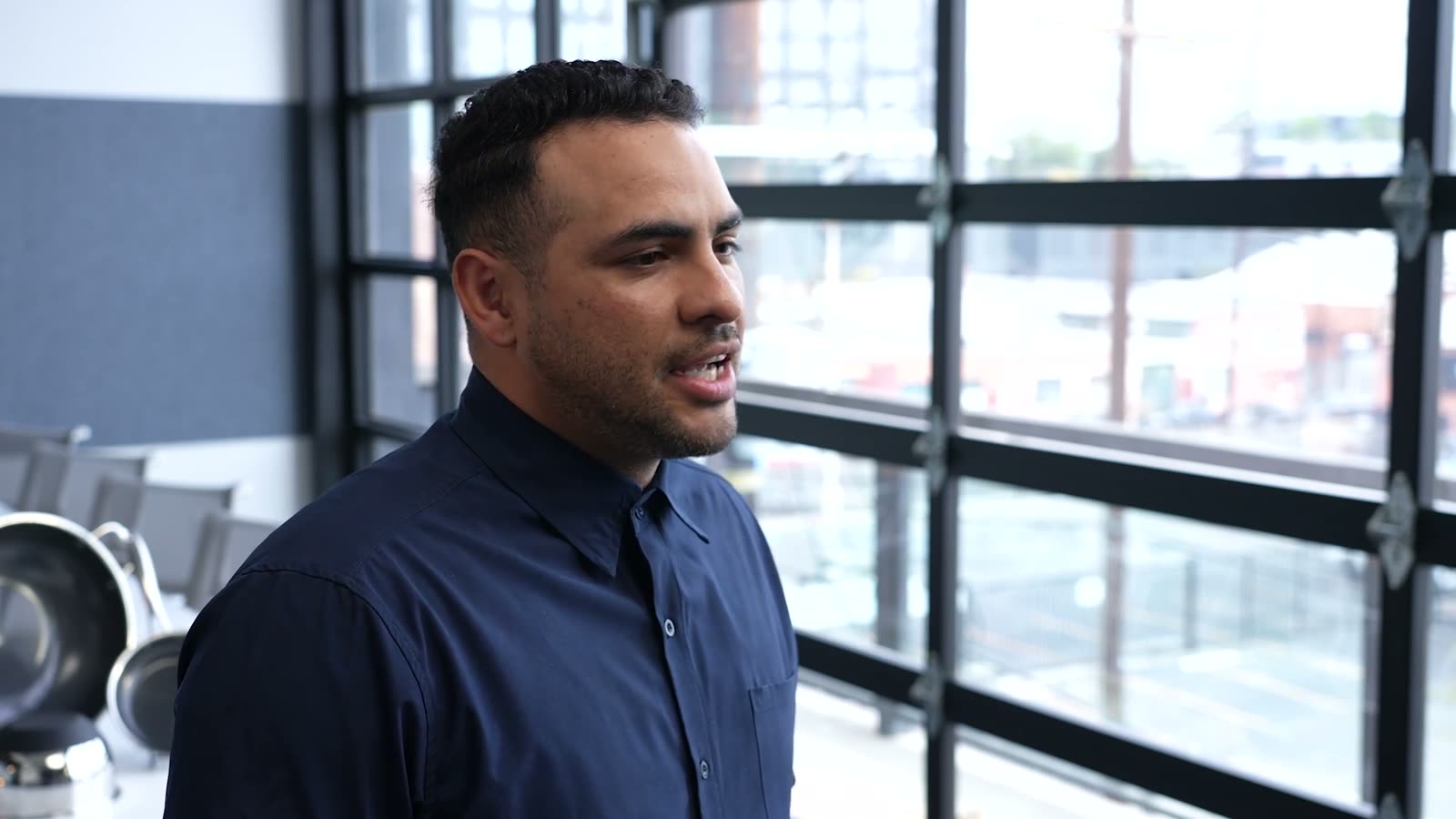 Manuel A. CalderonSenior Global Operations Manager, HexClad
“By using Claude we're able to simplify our platforms that we're using and minimize the amount of apps that we have.”
During Black Friday and Cyber Monday, Brian Nanry's team used it to watch every 3PL while the orders came in.
Brian NanryHead of Operations, HexClad“Instead of being reactive and fighting fires, we were able to identify issues, identify slowdowns, find any problem with any 3PL fulfillment process that we could ahead of time.”
Brian Nanry used the same view to report to HexClad's leaders and to other departments during the peak.
For Manuel A. Calderon, a question that used to go to the team as a task is now one he asks himself.

06
HexClad's operations and accounting teams both run on Fulfil.
Jason PanzerPresident and CFO, HexClad“I don't think I'm giving anything away when I say that HexClad is over a half a billion in revenue business. I don't think we could have gotten here without Fulfil partnering with us.”
Jason Panzer was a tech investment banker and a lawyer before HexClad. He compares Fulfil to Excel in the hands of a financial analyst.
Brian NanryHead of Operations, HexClad“Laying the groundwork for an incredibly efficient and functional fulfillment network is never going to be an easy thing to do. You might as well do it with partners that are going to make it as easy as possible.”
HexClad keeps adding warehouses, regions and channels, and expects the system to change with it.
07
The film, word for word.
Read the transcript of the HexClad film
Jason Panzer: I don't think I'm giving anything away when I say that HexClad is over a half a billion in revenue business. I don't think we could have gotten here without Fulfil partnering with us. Things were pretty messy at HexClad on a lot of levels when I joined, and inventory management, demand planning, and distribution were all real problems. They were great problems because our business was growing incredibly rapidly, but we really didn't have a handle on it, and one of the first things that I did coming on as CFO was try to figure out how to manage our inventory, and it took quite a lot of time. We wanted something that was D2C native, and Fulfil delivered.
Manuel A. Calderon: At the beginning I was managing the warehouse. Everything was done on Excel sheets, spreadsheets. We had no real WMS, nothing that actually tracked our inventory aside from spreadsheets. It was rough, but Fulfil kind of, you know, simplify things, make things easier, accessible. Fulfil's helped by, you know, having everything under one umbrella. These automations kind of take the legwork out of it. We don't have to second guess as to who's supposed to fulfill what. Everything is down to the zip code.
Obviously at this time all, you know, software companies are implementing AI in some kind of way. Like, I think when we started we had, we had Gemini, we had Chat [unclear], and now we have Claude. Now we can kind of eliminate those other two for other stuff. We just kind of stick to one. By using Claude we're able to simplify our platforms that we're using and minimize the amount of apps that we have.
Brian Nanry: Being able to utilize the MCP with Fulfil and Claude was monumental. Kind of changed how we were able to operate and how we were able to navigate our BFCM period last year. Instead of being reactive and fighting fires, we were able to identify issues, identify slowdowns, find any problem with any 3PL fulfillment process that we could ahead of time, that a year prior we weren't able to, that three months ago we weren't really able to, to be fair.
Domestic US, we've gone from two fulfillment centers to five. We have kind of taken control over our Canada entity, opened a 3PL and second subsequent 3PL on top of it. We've opened Mexico as a new region, we've opened Japan as a new region, we've opened China, we've opened Australia. It enabled us to get a much different and higher vantage point of our overall performance in real time while it was happening, which was invaluable in communicating upward and communicating across departments.
Laying the groundwork for an incredibly efficient and functional fulfillment network is never going to be an easy thing to do. You might as well do it with partners that are going to make it as easy as possible.
Jason Panzer: And it's a good team. I never hear complaints. I mean, look, there's always something with the tech provider, right? Fulfil is like deeply engaged with making sure that we are successful. And I know that Fulfil is also innovating on their side, and which is the kind of partner that we want. Thank you.
HexClad runs on Fulfil
Next story

 Read the story