 Hemp wellness · 2026
HempLucid's last organic inspection took under 45 minutes in Fulfil, where its previous software took about four hours.
HempLucid makes organic hemp wellness products and faces inspections up to four times a year. After Stitch Labs, Cin7 and a year on Luminous, its lot records were hard to find and its stores did not stay in sync. On Fulfil it traces every ingredient to the customer and ships an order in about a minute at peak.

The story in short
- Sells
- Organic hemp wellness products, including gummies with cannabinoids, functional mushrooms and lion's mane
- Channels
- Two Shopify stores, a separate B2B website, white label work, and warehouse services for brands it sells. One warehouse, in Utah
- Before Fulfil
- WooCommerce and Shopify with Stitch Labs, QuickBooks and Xero, then Cin7 for four months, then a year on Luminous
- Who speaks
- Nathan Beckham, CEO and co-founder. Brandon Orgill, VP and COO
01
HempLucid has made organic hemp wellness products for almost ten years.
HempLucid has been in hemp wellness for almost ten years. It is known for organic formulations that it makes itself, and its range includes gummies with cannabinoids, functional mushrooms and lion's mane.
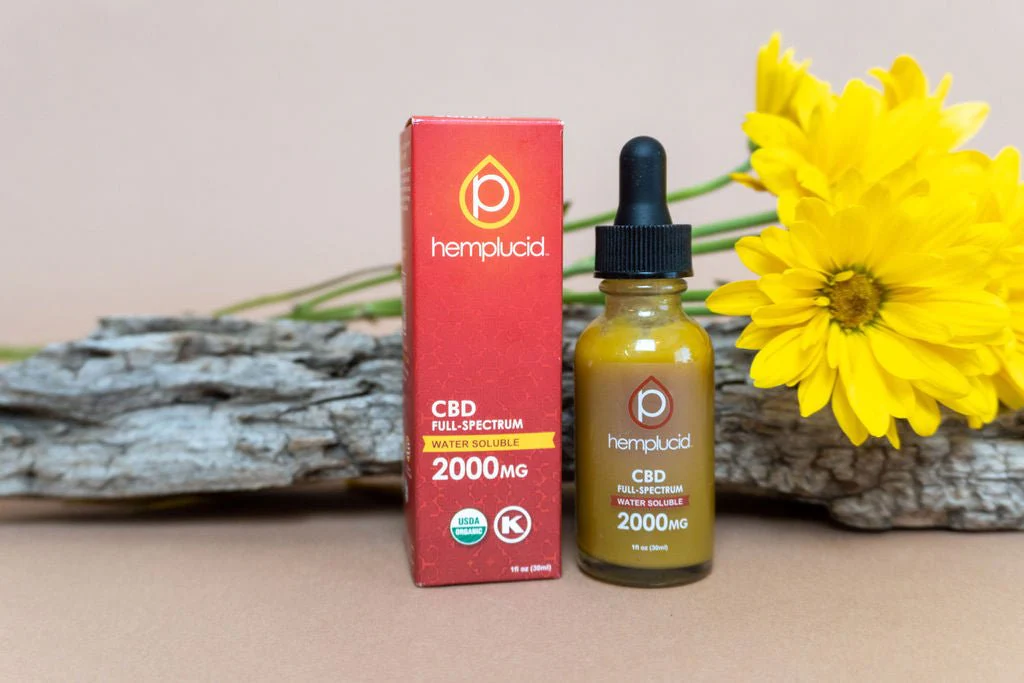
HempLucid sells through two Shopify stores and a separate B2B website, does some white label work, and holds and sells stock for other brands from its one warehouse. Brandon Orgill, VP and COO, runs operations and the warehouse and inventory software, and has been at HempLucid for a little over seven years.
Nathan BeckhamCEO and Co-founder, HempLucid“We've gone through a lot of different builds and tech stacks.”
02
HempLucid went through Stitch Labs, Cin7 and Luminous, and none of them fit.
HempLucid started on WooCommerce and Shopify, with Stitch Labs, QuickBooks and Xero. That setup had no manufacturing, so HempLucid moved to Cin7, and found it heavy.
Nathan BeckhamCEO and Co-founder, HempLucid“I think we were four months in and we were just like, this is not going to work.”
Next came a year on Luminous, a lighter program. HempLucid shipped its orders out of Shopify instead, because Luminous could not ship as well. Costs did not flow through, and stock counts did not reach the second Shopify store, so the team keyed them in by hand.
One earlier vendor's update wiped HempLucid's production records, and the vendor could not restore them.
 Brandon OrgillVP and COO, HempLucid
“They pushed a software update that deleted six months of our production records. They couldn't find a fix for it, so I had to go back to all my hard copies for everything.”
03
HempLucid faces up to four inspections a year, and its old software made each one slow.
HempLucid is an organic certified handler and manufacturer and a hemp brand. Inspections come two, three or four times a year, at random, and each one asks for lot records for everything HempLucid makes.
Nathan BeckhamCEO and Co-founder, HempLucid“We need to be able to do reporting effectively and quickly and confidently so that we can show these reports.”
 Brandon OrgillVP and COO, HempLucid
In the systems before Fulfil, the lot data was stored but hard to see, so Brandon Orgill pieced each audit together from exports.
Brandon OrgillVP and COO, HempLucid“A lot of that information was technically there within the system, but it wasn't very visible. So if ever came time for an audit, the process took five times longer than it needed to.”
HempLucid makes liquids, and the inputs vary from batch to batch. Systems built for fixed recipes could not handle that.
04
HempLucid chose Fulfil for multi-stage manufacturing and lot tracing, after an onboarding that mapped every step.
Fulfil's team flew out to visit HempLucid, talked through what it needed, and wrote down the scope and the edge cases before onboarding began.
Nathan BeckhamCEO and Co-founder, HempLucid“Other software onboarding can be very templatized, very quick, and very pushy to get through some stages.”
During implementation, Fulfil's team asked Brandon Orgill how he wanted each process to run, from receiving and purchase orders to production and sales, and set the system up to match.
Brandon OrgillVP and COO, HempLucid“That's one of the things where you don't run into that with Fulfil. You know exactly what you're going to be getting out of it because you've talked through the process top to bottom.”
Fulfil carries HempLucid's landed costs through to every product, which Brandon Orgill had built by hand in spreadsheets before.
05
HempLucid ships an order in about a minute at peak and traces every ingredient to the customer.
HempLucid had used several 3PLs and paid for their mistakes in returns. It brought shipping into its own warehouse and set it up with Fulfil's team, using scan guns.
Nathan BeckhamCEO and Co-founder, HempLucid“We have the lowest pick pack errors ever. Well under 0.1, you know, I think it's under 0.1% for sure.”
At peak, HempLucid prints, packs and ships an order in a minute or less.
Every work order in Fulfil links to the purchase orders its ingredients came in on and to the customers who got the product, so HempLucid can follow a lot either way.
Brandon OrgillVP and COO, HempLucid“It's like you can just tie everything together so perfectly that from a compliance standpoint, it is a game changer.”
Nathan Beckham credits Fulfil with helping HempLucid gain its organic handler certification.
06
Brandon Orgill did the software side of HempLucid's last organic inspection in under 45 minutes.
Brandon OrgillVP and COO, HempLucid“We were going back and checking records and everything in a little under 45 minutes. And my most recent piece of software, that took me about four hours.”
Fulfil logs who changed what and when, so a data entry mistake at HempLucid can be traced and fixed without a hunt.
Brandon OrgillVP and COO, HempLucid“If you make a change in the system, something gets messed up, you can go back and see who made that change, when that change got made.”
HempLucid is in Utah, where many supplement makers work, and Nathan Beckham has seen what software they try.
Nathan BeckhamCEO and Co-founder, HempLucid“There's softwares out here, you know, multiple people and seeing what everyone's trying, but Fulfil has been the best that we've ever used.”
07
The film, word for word.
Read the transcript of the Nathan Beckham film
Nathan Beckham: I'm Nathan Beckham. I'm currently the CEO at HempLucid, one of the co-founders. We've been here, our company's been around for almost 10 years. In the space, in the hemp space, hemp wellness, we've been a premium brand and product innovator within the space. We're one of, we're known for our, you know, organic formulations and manufacturing. And that's part of our premium stuff. We also offer innovative wellness gummies that include cannabinoids and other supplements such as functional mushrooms and lion's mane. We have a sleep gummy that's really phenomenal. And that's really where we come from on the wellness side on hemp is trying to produce products to help people on their wellness journey that may be alternatives to what they're already using.
We've gone through a lot of different builds and tech stacks. We started on WooCommerce and Shopify. We were using Stitch Labs, I believe, at the time with QuickBooks and Xero. And so we ended up connecting a nice [unclear] tech stack that was a great for startup. But we were missing manufacturing. And so we moved to Cin7 for a minute with our tech stack as far as our manufacturing ERP that we needed to add on. And, you know, we ran into a problem with that bulky software and where it just seemed like it had been around for quite some time and that layers of complexity had been installed upon it. And it was not what we wanted. I think we were four months in and we were just like, this is not going to work.
You know, we kind of unwinded into a very light program. We spent a year on it. We went to Luminous. Ended up, you know, just kind of shipping everything out of Shopify. We couldn't ship from it as efficient as Shopify. It's useless if Shopify is just better at everything, including the reporting and all of it. We weren't getting cost structure push. There was bugs on quantity pushes to multiple stores. It was a multiple store factor that really broke them a little bit. It broke that software, and that created some complexity that just didn't translate very well. So we have to manually input costs, manually input a lot of different things and pull data over. And it turned into a lot of manual reporting work.
You know, as an organic certified handler and manufacturer, it's very important for us to pull these reports quickly. Otherwise, it just takes time when these inspections come. We're also a hemp brand. We have inspections two, three, four times a year randomly. We need to be able to do reporting effectively and quickly and confidently so that we can show these reports. and so that was a it was a problematic um a lot of manual entry for movements and different things in manufacturing issues that we had to work around that were specific for us and so what we found out is Brandon uh the warehouse manager production manager was spending you know a lot of time on just trying to update systems and keep them right through manual you know updates and you know that's not a great way to prove you know to run an ERP or inventory management system and um and so yeah So we just, we, we weren't happy with it.
It was causing scaling issues. A lot of extra time was put in there. At Luminous, it didn't handle the, it's like, as we wanted to scale and add, you know, add our B2B website, you know, that which we run separately or add other sites or 3PL, you know, we were, we turned our warehouse into a 3PL services that we would provide for other brands, other brands that we kind of sold into our B2B sales market channel as well. So we kind of held and we are holding inventory and selling these brands. And so, you know, just being able to adapt and be agile as industry and the company changes, you know, adding these specific different ways to make revenue. It just didn't help. It wasn't effective at some of that.
And like I said, as soon as we added the second store, it didn't really want to send updates to that store. And so then, you know, he had to manually update certain stores and that defeats the purpose a lot of if you're an inventory management software system and we're trying to get data of quantity to these stores in which we have multiple stores in one single warehouse, it shouldn't be as difficult as it was. So I think that was a big part of it is just all this manual audit and rework just to keep the system working, you know, and up to date so that he could have to, you know, get these reports were still not great. So, yeah, I think that's part of the big factors that they just were lacking in thought.
It was more like, OK, are you a single e-com brand with maybe very light, light manufacturing? Then maybe that would have worked well for those couple of brands. But we've kind of been around for a minute. We have a B2B and a D2C sales channels. We've got other brands we represent. We've got kind of complex manufacturing. Not super complex, but multi-stage manufacturing. Liquids, concentration, stuff like that can be a little bit more difficult. Other software onboarding can be very templatized, very quick, and very pushy to get through some stages. You know, first the sales handoff and then, you know, and then you're like, wait a minute, the onboarding is much different than what we talked about. I think I really appreciated everything that's taken place.
You know, you guys flew out, came and visited us. We chatted about what our needs were, what was possible, had some calls with people, really checking the scope out of and really coming to understand exactly why and how we could be a good fit to each other. and then you know then they came back and said hey we looked at everything we want to we want to bring you on and we want to make sure that this the software is simple and works for you i was very impressed with how we went through the whole scope the team the amount of time like everyone was taking to make sure that this is what was said this is what was talked about this is what we're going to talk about again did we make sure everyone is aligned and through the stages making sure that the scope and alignment and the edge cases that matter are really documented and looked at for the onboarding process to be effective.
So I think there's been a key strategic understanding of where onboarding process may fail. Because in my experience, some softwares, if you screw up the onboarding process as the customer, you don't understand fully what you're doing and maybe you set it up incorrectly or you get the wrong information to that setup partner and you get through it and then you know six months and you're like i think we might have screwed something up here and the scalability or other issues start to come out our success manager i feel like it's been a night and day difference compared to any other um onboarding out there that i've you know recently or any of them it seems like uh and And we've done a lot of different softwares.
Fulfil allows us these little minor things that, you know, these smaller ERPs really hadn't figured out. We were able to incorporate some phenomenal technology with Fulfil, including the scan guns, which we really, you know, we had a small op and we were really efficient on, we wanted to be really efficient on shipping. We had used so many third-party 3PLs, and it was not only costly, the amount of mistakes was unreal. Returns were costly. And so it just added a layer of complexity and cost that when you own the process and you can dive into efficiencies, you're not there to try and make profits and take money from people, from other services, from other vendors. It became a very efficient process with Fulfil.
So we adapted the scan guns. And when we were not batch printing, because our orders were pretty much very unique, we were able to print and ship and pack, print, ship orders within one minute, if not even faster, at peak demand. And so we loved it. It was phenomenal. It was [unclear], protected. It would give warning. And we worked with Fulfil team to make that scan gun, you know, absolutely fire. Some of the key points, like as an operator or a founder or an executive looking to, like, streamline, I don't think that there is a better system out there. At least, you know, we've looked at a lot of different ones. Even Zoho Inventory we tried out. We tried out so many different ones. and you know a lot of people a lot of things it's like oh tack on ShipStation or this or that and everything's going to be fine and [unclear] and in the end it's like it just adds extra complexity that really doesn't add up into savings but what we noticed was with Fulfil is we were shipping orders faster than even 3PLs could couldn't even understand um and so we set up a process using their software and their guidance that was better than anybody on the market.
And I stand by that. [unclear], we have the lowest pick pack errors ever. Well under 0.1, you know, I think it's under 0.1% for sure. We know how much, how important it is when the conveyor belt of shipping gets reversed from mistakes. there's so much extra time customer support reshipped cost of shipping labels boxes redo and stopping your system from moving one direction and then reversing it to import you know inbound these mistakes is very costly if you can just keep that going the one direction without mistakes it's such an efficiency that you know you're not you're not dealing with these random things you shouldn't be dealing with where you're like oh just throw customer service at it that's a failure to think that way I think that you start at the source and avoid the problem from the beginning.
And I think Fulfil showed us that that was possible. And so, you know, I think that that's a huge undercutting for CPG is mistake-oriented shipping is a big problem. A lot of people make the mistakes and then they just deal with it on the back end. And I think that with the right software and setup, you can avoid those all from the beginning. And so that's what I think Fulfil brings there. On the other side, it offered very much a lot of expansion into multi-store operation the quality of the manufacturing capabilities multi-stage manufacturing the reporting there was a lot of awesome little things there you know as we set everything up that we were able to take advantage of really built right into our organic manufacturing uh certifications and uh and handling and it was necessary to meet those those those requirements.
And so it's very easy if you have issues to backtrack stuff through them. You know, in CPG manufacturing, you have to deal with, especially in the wellness or supplement space, there's a lot of tracking and inventory management and lot coding. You know, you're giving out ingestibles. You need to make sure that your software is tracking all that legitimately. And so that, you know, Fulfil helped us gain organic [unclear] which is not an easy thing to do. And so I think, you know, equality matters. And, you know, you don't want to make mistakes and [unclear] after all of the different ones we've tried that integrates well for e-com partners that have light manufacturing, especially in the wellness space.
You know, compared to everything else, you know, we're here in Utah. It's one of the wellness capitals of manufacturing or supplement manufacturing in the United States. and there's softwares out here, you know, multiple people and seeing what everyone's trying, but Fulfil has been the best that we've ever used.
Read the transcript of the Brandon Orgill film
Brandon Orgill: My name is Brandon. I am the VP and COO, kind of run all of operations here at HempLucid. I am the guy who handles all of the WMS ERP software stuff, basically top to bottom. That's me. We sell out of two different Shopify channels primarily. We also do a little bit of white labeling, sell for some random clients across the country. We operate out of one warehouse. So there's been a few big challenges I've run into with various pieces of software. So in our industry and with our organic certification, we do have to have pretty stringent lot code tracking for everything that we do. And what I was running into with a bunch of other softwares, they didn't handle it or they didn't handle it well. A lot of that information was technically there within the system, but it wasn't very visible.
So if ever came time for an audit, the process took five times longer than it needed to. One of the other problems I run into is just like a bunch of bugs where technically stuff was in there, but data got corrupted. And I ended up going back and having to check hard copies to cross verify everything. And, you know, part of an inspection should have taken me 20 minutes, might take me two or three hours because I got to go [unclear] the system. One of the big things that's been nice [unclear] that has been an issue with other things is accurately tracking landed costs for all of our products, having costing across everything straight through the system. Anybody who's had to handle any of this on their own knows it can be a little bit of a nightmare making your own sheets and everything.
That's one of the things that other pieces of software we've used have just not handled very well, unfortunately. I think it was really good at helping you figure out forecasting, getting your inventory planned out, figuring out what your sales velocities are, kind of putting everything in one spot so that you don't have to go build out a bunch of sheets, do a bunch of analysis on your own. I mean, obviously, you still want to verify and cross-check everything, but everything's there easily, able to find, and it makes your life super easy. Also, if you ever run into any issues, you have to go back, check what went into a work order, what went to a customer. You can easily backtrace every ingredient that's used for every single product.
You go, oh, this customer got this product, which had A, B, C, and D ingredients in it, and I received all those on these different POs on these days. It's like you can just tie everything together so perfectly that from a compliance standpoint, it is a game changer. We've used a few pieces of software over the years since I've been with HempLucid. I've been here for a little over seven years now. Most of them are some little bit smaller ones. Some of them just didn't have the capabilities that we needed. Flexibility on the manufacturing side in our industry, liquid manufacturing, so our inputs can vary from batch to batch. That was a hang-up for a lot of people because they wanted to make a bike. and, you know, two wheels in one frame and we're not making a bike.
And so it's like sometimes I've got 2.5 wheels and their systems didn't quite like doing that and didn't know how to handle it. So that was a really big part of it that kind of helped drive [unclear]. And that and the ability to just backtrace everything that's taken place. You know, there's a link in there for everything. You can click through to find the PO. You got something to see what customers everything went through to. that makes your life a million times easier than trying to jump between five different pieces of software. Check this spreadsheet over here. I'm going to go look in Google Drive for that. I'm going to go look through my email here. Fulfil has the ability to tie all that together just to keep your life simple and easy.
That way, if you ever need to tie in a new person, they don't have to come asking you all the time, hey, where do I go find this? Where do I look for this? You teach the gist of how the software works, what they need to look for, like it may be naming conventions or that kind of thing. And they should be up and running pretty quickly. And it's pretty idiot proof. It's got tracking on everything that you do. So if you make a change in the system, something gets messed up, you can go back and see who made that change, when that change got made. You can identify any errors, you know, just data entry errors, things that happened along the way. It just makes your life a lot simpler. My experience with Fulfil has been great, like on a customer service standpoint.
I've worked with other companies that have pretty decent customer service as far as, you know, people will be willing to get back to me. They're communicative. They're nice. But the problem resolution side of things is when you talk about stuff that's managing your software, that's managing your inventory, that's sending inventory to different stores, keeping you compliant for different certifications. you really want things to work properly. And so if anything does pop up, having somebody there who's willing to help get it fixed and make sure you're good is very important. And that has been one of the things that has definitely been a bigger headache with a bunch of the companies that we've worked for or worked with, excuse me.
You know, on the surface, nice people, but sometimes the problem resolution just took way too long. And sometimes they broke stuff they didn't know how to fix, to be frank. We worked with the software. They pushed a software update that deleted six months of our production records. They couldn't find a fix for it, so I had to go back to all my hard copies for everything. And, you know, that's not the kind of experience you want to look for, obviously. Fulfil offers really extensive release notes anytime they push an update. If anything is going to be changing, as long as you're staying on top of reading it. You know what's changing, you know why it's changing, you know how it's changing. And if you need to adjust process, you know, it's there for you.
So you're not making your life more miserable. Fulfil implementation process is, let's say it is very thorough. Beyond the needs that I actually need, which is a breath of fresh air in a lot of instances because they're asking questions. The team's asking me questions. getting things lined up to make sure that they have processes built out that match my particular needs. Whereas I'm just going, okay, give me the software and I'll play around and make it work. They're going, well, how are you wanting to use it? And I go, okay, well, if this is what you're planning on doing, or this is how you have been doing it, here's what we can do within the software. And here's some ways we can set it up on the backend to make sure it's doing exactly what you want.
And you're not trying to work around how you think the system works. and you know sometimes that means hey this is the process you've been doing we can do that better for you i can save you time i can do this we can make these changes so like i'd say like the key thing that i would say more than anything is is incredibly thorough um very good at asking what i need what my processes are what i want to get out of it um and then just asking a million questions to make sure it's fully understood and everything is implemented the way that you want it to run. As far as that goes, that is not something I've run into with other companies. A lot of people we've worked with kind of are like, okay, let's import some data and you're good to go.
You start playing around, you figure out how things work. You realize, okay, this didn't pull in the way I thought it was going to pull in. This process isn't flowing the way that I thought it would flow. The sales pitch that they gave me on this particular module doesn't really cover my use case. It's just enough different that I thought this was going to work and it's broken. That's one of the things where you don't run into that with Fulfil. You know exactly what you're going to be getting out of it because you've talked through the process top to bottom. Receiving, making purchase orders, doing jobs to run, make inventory. How you're selling stuff to your different customers. How everything's being tracked.
How you're delineating who gets which product. You have multiple versions of the same thing. Like, hey, I need this wholesale customer to get a product that has a [unclear] that's out a year and a half where my retail customers might be able to get it, you know, six months out. And so just making sure that, you know, all the way along the process, who's supposed to be getting what, what's supposed to be happening, and just making it so no matter who you plug in, it's extremely hard for them to accidentally mess something up. And if they do, again, you've got all that tracking in there so that you can get that sorted out. The big differentiator for me is just the ease. Because it's not like a lot of these other softwares don't necessarily have capabilities in a lot of ways.
It's just the ease, the time-saving. Also, just make it like you're confident knowing things that are going to work properly. [unclear] software where they kept having conversion issues. So you might be using something in kilograms and consuming it in grams. And all of a sudden it thinks my product cost me $2 million to make when it cost me $2. That's an actual issue I ran into. It's like, okay. And depending on when you catch it, you have to go back and like, okay, let's go fix this for how long has this been going on for? Oh, I've got three months of inventory that is massively misvalued for me. And that's another one of those elements that like Fulfil just handles perfectly. On my last organic inspection that I did with Fulfil, I was able to do the entire thing, the software side of things.
We were going back and checking records and everything in a little under 45 minutes. And my most recent piece of software, that took me about four hours. Something I can do in Fulfil in probably a minute might take me five outside of Fulfil. You know, it's one of those things where in little chunks, it doesn't feel like a lot, but in circumstances, it certainly adds up a lot. And on that front, also, it's just like the ability to plug somebody into it. Once they know how things are working, they're supposed to work, you kind of taught them the flows. They can pick it up very easily. And the time saving on not having to deal with user error issues is pretty massive because, you know, I spent I used to spend a lot of time tracking down issues that were caused by other people who were using the software because the software didn't behave the way they thought it was going to behave. and without all the tracking that Fulfil has natively, sometimes it was quite a bit of a headache to figure out what was going on, where things went wrong, and why my [unclear] here, and who did that.
And, I mean, that amount of savings is really hard to quantify, but it is significant. All of my experiences working with everybody top to bottom at Fulfil have been top-notch. Everybody is super nice, is super professional, super respectful. They're very good at identifying what your need is, identifying what the problem is, letting you know timelines on getting stuff fixed, implemented, done, and following through. Like, I've never run into a hiccup on that front, ever. And again, that's pretty rare when you're dealing with software that has as much complexity as what Fulfil can bring to the table. And it has the ability to scale and do so many things that is like, okay, maybe I don't need this right now. for my stage of where I'm at with my business.
But five years down the line, this is still going to work when I'm doing 10x the volume where a lot of other software you're going to run into. It works today and you're going to have to switch over in two or three or five years. And anybody who's ever had to do that switchover process knows it's not the funnest. It's very time consuming. And it's much better, much easier if you can just set it, forget it, and just like run with something that's working, [unclear] from the get go, and [unclear] wonderful.
HempLucid runs on Fulfil
Next story

 Read the story