 Silicone rings and accessories · 2026
Enso Rings makes, engraves and ships its rings in one system.
After three and a half years on NetSuite, the Utah brand moved to Fulfil. Its COO counts $80,000 to $90,000 a year saved in labor, and a second brand now ships from the same warehouse.
The story in short
- Makes
- Silicone rings and accessories. About 80% of the rings are made in Utah
- Channels
- Shopify, Amazon in the US and Canada, wholesale, licensed products
- Before Fulfil
- NetSuite, Celigo, ShipStation, Stitch Labs
- Who speaks
- Mike Gallman, COO. J.J. Dilworth, Operations Manager. Tanner Moss, Director of Finance
01
From raw material to a boxed ring, in-house.
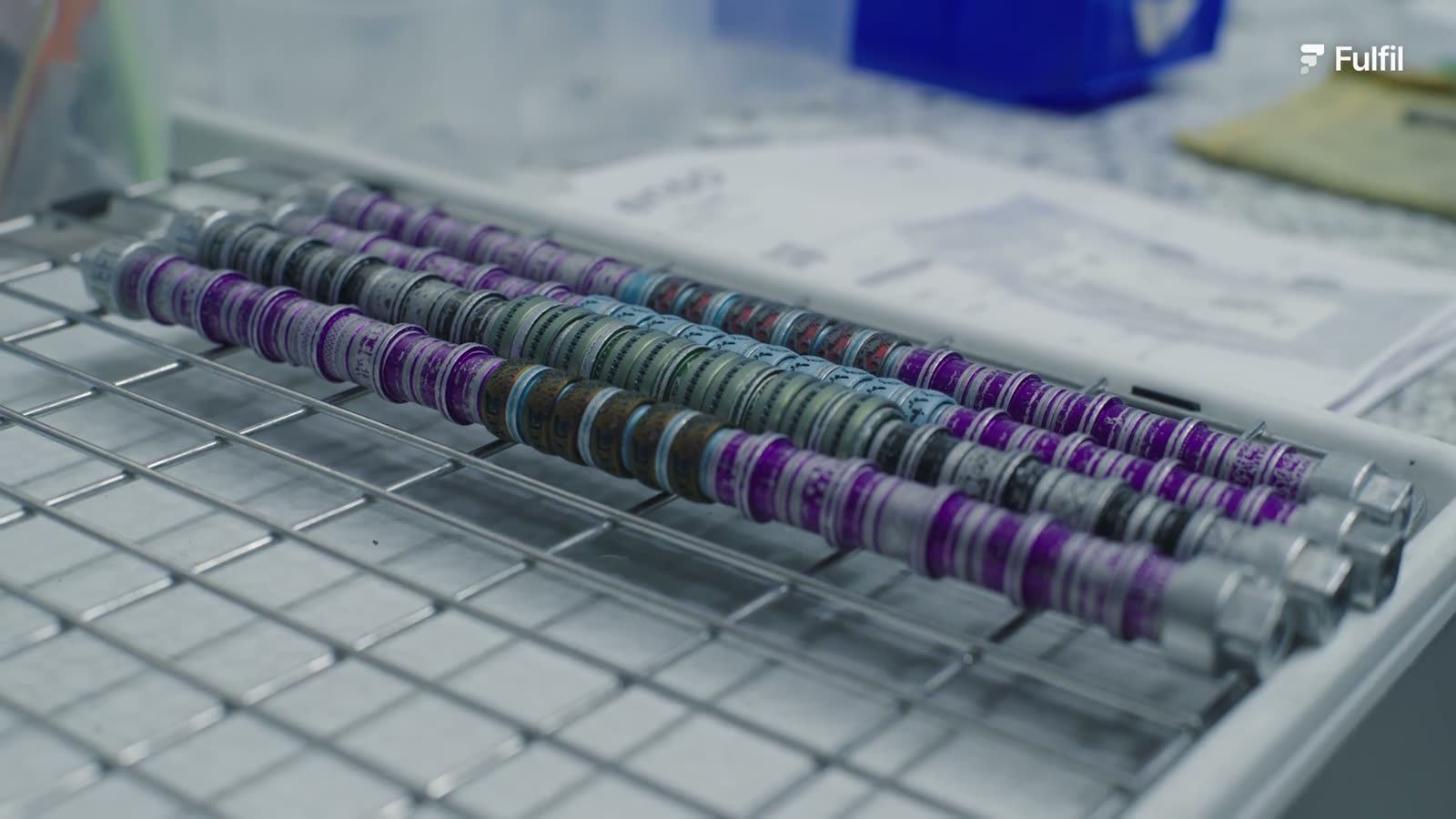
Enso Rings mixes the colour, forms the ring, engraves it and ships it. It does all of that in-house, in Utah.
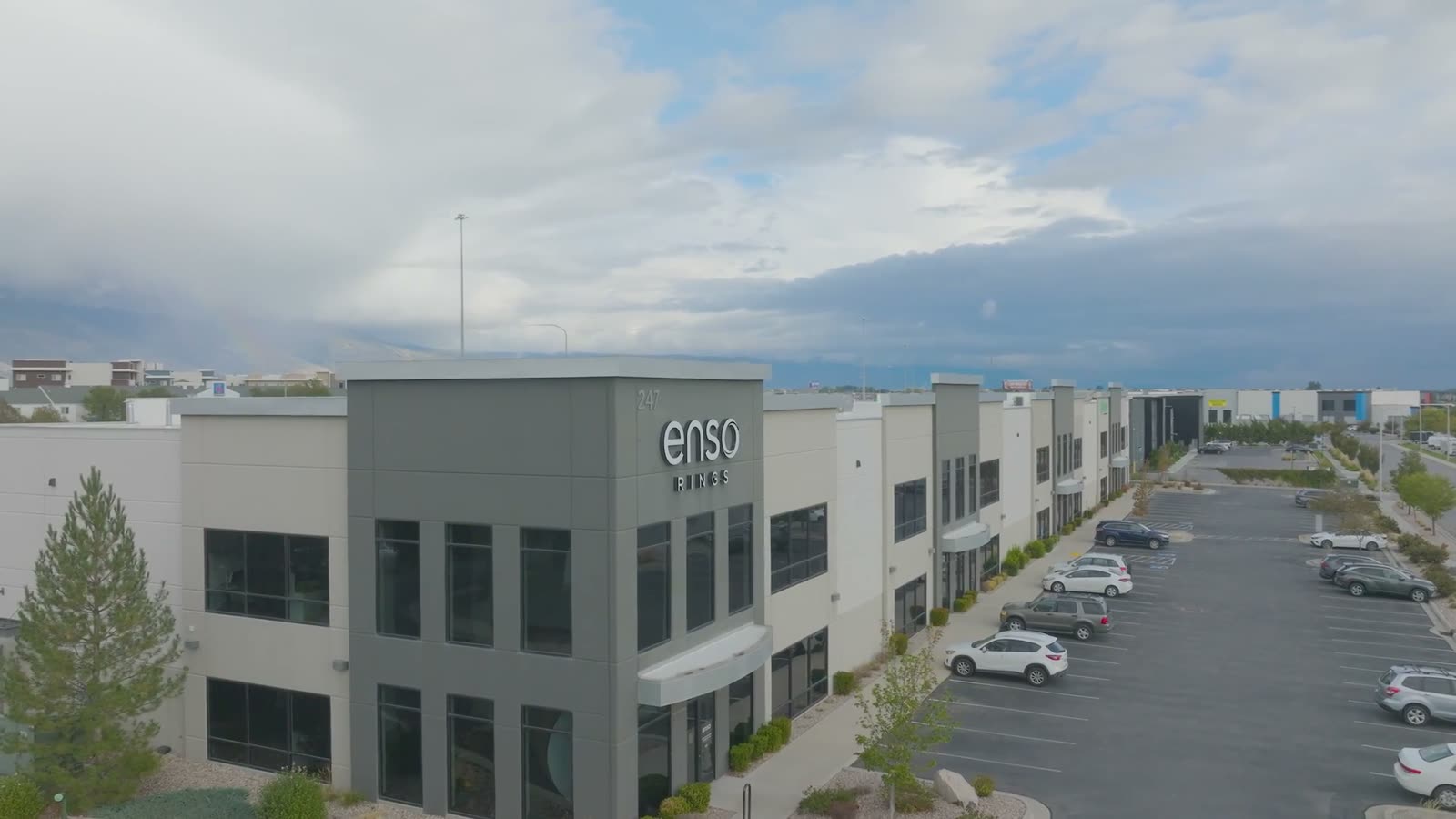
It was not so in 2018. Then about 20% of the rings were made in the US and the rest were bought. Today about 80% are made in-house. Fulfillment came back from a 3PL, and engraving came in-house too, for licensed products of partners such as Disney, Marvel, Pokémon and the NFL.
 Mike GallmanCOO, Enso Rings
“From a supply chain standpoint, we control a lot of that supply chain right here.”
02
The costs that were not on the quote.
About six years ago Enso looked at two systems, NetSuite and Fulfil, and chose NetSuite at the last minute. The project had a plan of six months and took nine. Shopify, NetSuite and ShipStation needed middleware between them, and an order could take 15 to 45 minutes to go from one to the next.
Enso needed an admin for those connections. Warehouse management was a paid add-on, so the warehouse stayed on paper.
The costs that Mike Gallman counts, by his estimate
 Mike GallmanCOO, Enso Rings
“There’s hidden costs, and those hidden costs really start to add up.”
03
Back to the team it nearly chose.
Rajen at Fulfil had stayed in touch with Enso for the three and a half years on NetSuite. When Enso decided to change again, the supply chain lead, Austin May, called him. This time the work did not all land on the team of Enso, and the scope had no surprise in it.
J.J. Dilworth, the Operations Manager, has been through three or four ERP implementations.
 J.J. DilworthOperations Manager, Enso Rings
“By far, Fulfil was the easiest one I've ever experienced, and I think the team would say that too.”
04
A warehouse without paper.
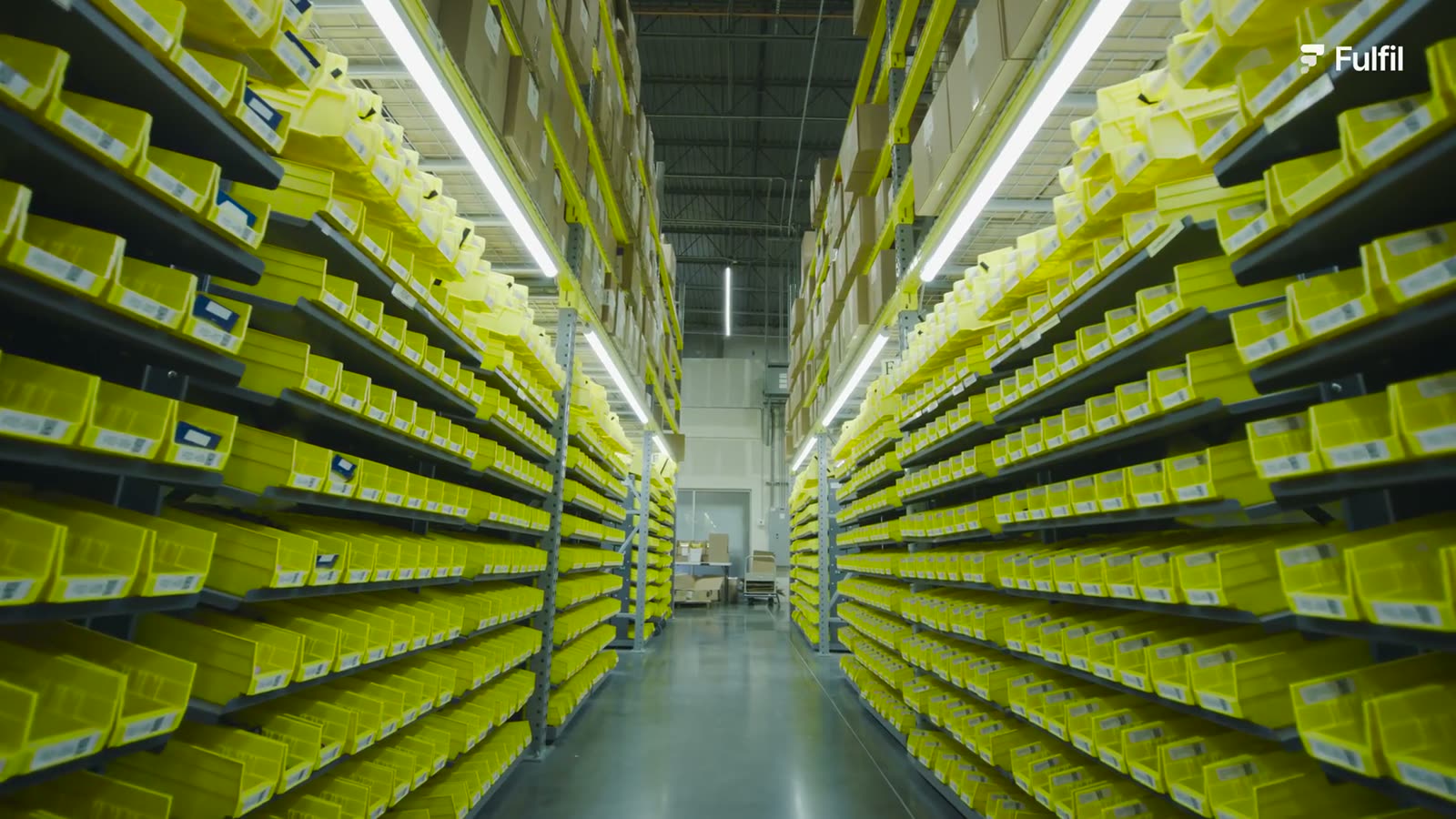
Before, the label and the pick list came out of the printer together, so an order showed as shipped before anybody picked it. Pickers worked from a description. Now a picker has a handheld, goes to a bin location, and scans each pick.
 J.J. DilworthOperations Manager, Enso Rings
“Now we’re picking by location. There’s no description, there’s no SKU on it. It’s just a location.”
Pick times are 30% better or more. A new picker does useful work on the first day, and in the busy season people from other departments help on the line. At pack-out the screen shows the type of packaging for each order.
05
Four people in finance. Every channel in the same books.
Shopify, Amazon and EDI orders post to one general ledger. Enso reports a profit and loss for each brand, and builds each royalty report from the data warehouse in the format that the licensor asks for.
 Tanner MossDirector of Finance, Enso Rings
“We have connections with Shopify, Amazon, and EDI platforms, and those integrations have been very smooth, with very few hiccups.”
In 2026 Enso bought Lokai and put it in the same warehouse: more than 7,000 SKUs, with new Shopify and Amazon stores, at no extra cost for the new connections.
06
The film, word for word.
Read the transcript of the Enso Rings film
I came on board a little over eight years ago at Enso Rings, and at the time we were outsourcing all our fulfillment, with no ERP system. The company had been around about three years and had grown significantly. They were around $1 million in revenue, so they had a lot of orders, and there were a lot of issues with inventory and figuring out exactly how we were going to get all the orders out and take care of all the inventory.
I'm sure every company thinks they're in a really unique position or a really strange business case. For us, we always struggled to find a system that could accommodate widespread manufacturing and our SKU count. It's high SKU counts, low products. Previously, we were using systems like NetSuite, which was extremely powerful, but you always had to pay some developer to build a custom script or an app to get the functionality you wanted. We always struggled to find something that could handle both the manufacturing side and the accounting side of our business. So prior to Fulfil, it was a lot of work with developers to build bespoke solutions for our own unique case, on a tool that was probably too big for where we were as a company at the time.
What we didn't like was the middleware. We did not have a direct integration between NetSuite and Shopify, and I would say that was one of the big things that helped us decide we needed to find a different solution. That, and the fact that NetSuite continued to raise our price.
There's hidden costs, and those hidden costs really start to add up. You really need to understand what you're getting, because you will get a very well thought out system, but it's complicated. And one of those hidden costs is you have to hire a new ERP admin to help run it. You don't have that with Fulfil.
We had always stayed in contact with Fulfil. We really liked Fulfil. We liked the team at Fulfil. Fulfil was definitely more hands-on than we were used to, and it was awesome. They took work off my plate, which was great, because I can tell you, on our first ERP implementation with NetSuite, I was here from 7 a.m. till 1 in the morning sometimes, and on weekends, putting in a lot of work. So it was very helpful that Fulfil jumped in and helped us get things set up. They asked all the right questions. One of my favorite things was there was nothing that really caught us off guard. There was nothing in the setup process that was like, "Oh wait, we didn't scope this out properly. You might have something else you need to pay for to make the system work for you." Everything was properly scoped out, so it went very smooth.
In other positions I've held, I've had the opportunity to work with other accounting systems. What I've noticed with Fulfil is that it's very tailored to manufacturing and e-commerce businesses, and for that reason I'm very grateful for it being a perfect fit for Enso.
It was a mess before, so it's been really great to have pick, scan, verify. Before, we printed out the shipping label and the pick list in one, so it instantly showed that it was shipped, which it wasn't. And the pickers would pick off of a description instead of a SKU. There were inventory discrepancies. It was pretty crazy. Now we're picking by location. There's no description and there's no SKU on it. It's just a location. That has been a game changer for us. We've seen probably a 30% increase, it might even be 40. And pack-out has improved tremendously too, because it actually shows us what type of packaging each order goes in. It's been great.
I joined in mid-November, right before the holiday madness, and I was expecting the worst. You come in and there's this insane volume of orders going out the door. I literally stepped into a role as basically a picker and packer to start supporting my team. The way Fulfil walks you through the picking and packing process, it corrects any mistake that could be made by picking the wrong product or the wrong bin location. It has hard stops in place for all of those. So the training and the learning curve were so short compared to previous ERP and WMS systems I've worked in.
The biggest thing is getting people used to the handheld and the prompts. What does this do? What does that do? But during our busy season, we actually recruit employees from different departments to help out on that side. It's as easy as pressing a button, and it tells you what to do after that. It's been a game changer.
There are two parts to this, because there's dynamic engraving and then there's our etching. For dynamic engraving, we don't use work orders or work centers. We print out the pick list, the pickers pick the ring off of that, and then it goes up to engraving, where the custom text automatically pulls into our system and tells us what to engrave on it. For etching, the ring first has to be produced by our production team. Then it goes into quality, and then on to fulfillment, where it's stored. An internal shipment gets made so it can be pulled from fulfillment when needed. It goes to engraving, a work order is processed for it, and then it goes back into quality and then to fulfillment, on the line to sell.
With most ERP implementations, when you add another subsidiary, it's a lot of work. It's basically a full build-out, and I told the company we might need to prepare for something like that. But we did crunch the timelines, and it went very smoothly, because there's no additional cost for add-ons like new Shopify stores, Amazon storefronts, anything like that. Everything was basically already set up on our current Shopify and Amazon instances. We just had to set up the new ones, connect them, do a little bit of plug and play for certain GL-impacting fields, and get everything set up properly. It flowed really smoothly.
We recently bought a brand called Lokai, another silicone jewelry company. We've been able to keep a large volume of rings in a bin, but Lokai is a much larger product. We're still able to use a small footprint in the warehouse by automating bin transfers so they come in daily. My team picks them, fills the bins up, and we're ready for orders that day. That's another really cool process Fulfil has in place. Those bin transfers populate automatically based on a minimum and maximum we set, they fill up daily, and the team picks them. It's a really cool setup.
Fulfil is the source of truth for every transaction. Each of our royalty partners has very distinct royalty reporting requirements, so there really isn't a one-size-fits-all solution. A royalty report that works for Disney and Marvel doesn't work for Pokémon, and it doesn't work the same for the NFL. Having access to the underlying data structure in BigQuery has been critical. It lets us build custom reporting that exports all of our data in a format that's easy to use for all of the licensor templates.
My team oversees royalty reporting and royalty forecasting. We use the data warehouse and Power Query to pull those reports monthly for our monthly accrual, and quarterly. We have those reports styled to mirror the formatting requirements our licensing partners require. We pull them and review them before sending them off to our licensors. If we have any questions, we cross-reference with the subsystems to make sure the data is flowing correctly into those reports.
The Fulfil team has been great, very responsive. I haven't run into a situation where they couldn't answer a question I've had. They've been very helpful with the complexity of Enso, making sure we have what we need in place to run our business and that the accounting is done efficiently. I can't say enough great things about the Fulfil team and the customer support team. Tickets have been handled very professionally. I just couldn't be happier with that.
Customer service is the best thing I would highlight about Fulfil in comparison to NetSuite. We just didn't have the best experience with customer service at NetSuite. It's a night and day difference with Fulfil. The whole reason we reached back out to Fulfil is because we felt like it was a partnership, and that's still the case to this day.
Next story

 Read the story